


8 Seiten
60 Seiten
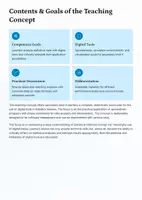
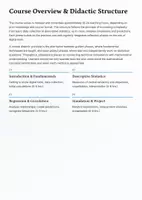


This comprehensive teaching concept provides a structured instructional unit on the use of digital tools in upper secondary statistics.
Designed for bilingual (CLIL) mathematics classrooms, the focus lies on data literacy, interpretation, and critical evaluation, not on software operation alone.
Students learn how digital tools support statistical reasoning while understanding their limitations and potential pitfalls.
Students will learn to:
analyse real data sets using digital tools
visualise data appropriately
interpret statistical measures and models
evaluate correlation, regression and predictions
identify misleading results and visualisations
reflect critically on data-based conclusions
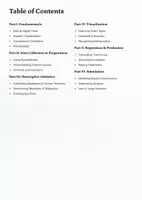
role of digital tools in modern statistics
data preparation and visualisation
descriptive statistics using technology
scatter plots, correlation and regression
forecasting and uncertainty
simulations and randomness
correlation vs. causation
critical reflection and data responsibility
differentiation and teaching guidance
Bilingualer Mathe-Unterricht (CLIL)
upper secondary statistics
data analysis and modelling
interdisciplinary teaching
CLIL and bilingual mathematics courses
upper secondary students
statistics and data literacy units
Bilingualer Mathe-Unterricht, digital tools in statistics, CLIL mathematics, data literacy, upper secondary statistics
Short Note All materials included in this bundle are also available individually. This bundle combines them into a coherent, curriculum-ready instructional unit for upper secondary mathematics. Overview This complete teaching bundle supports students in developing data literacy and critical statistical reasoning using digital tools. Designed for bilingual (CLIL) classrooms, it integrates teaching concept, worksheets, and presentation materials into a unified learning pathway. The focus is on meaningful tool use, not on technical skills alone. Included Materials comprehensive teaching concept structured student worksheets visual presentation slides real-world data sets discussion and reflection tasks differentiation for mixed-ability classes assessment-ready activities Key Topics digital tools in statistics data preparation and visualisation descriptive statistics correlation and regression forecasting and uncertainty simulations and randomness correlation vs. causation responsible data use Best for Bilingualer Mathe-Unterricht (CLIL) upper secondary mathematics statistics and data analysis units Keywords Bilingualer Mathe-Unterricht, digital tools in statistics bundle, CLIL statistics, data literacy, upper secondary mathematics
Klassenstufen: Q1 (11./12. Jhg.), Q2 (12./13. Jhg.)
Ein Fach. 16 Bundesländer. Eine umfassende Materialbasis für die gymnasiale Oberstufe.Mit FachKomplett Mathematik erhalten Sie die umfangreiche Gesamtlösung für den Mathematikunterricht in der Sekundarstufe II. Das Sparpaket bündelt die lehrplanorientierten Mathematik-Pakete aller 16 Bundesländer und eignet sich damit besonders für Lehrkräfte, Fachschaften, Schulen sowie alle, die eine möglichst breite und langfristig nutzbare Materialsammlung aufbauen möchten.Statt einzelne Lehrplanpakete separat zusammenzustellen, finden Sie die zentralen Themen der gymnasialen Oberstufe gebündelt in einem großen Fachpaket. Die Materialien orientieren sich jeweils an den landesspezifischen Vorgaben und sind so strukturiert, dass einzelne Unterrichtsreihen flexibel in die eigene Jahres- und Kursplanung integriert werden können.Alle 16 Bundesländer in einem SparpaketEnthalten sind die entsprechenden Mathematik-Pakete für:Baden-Württemberg, Bayern, Berlin, Brandenburg, Bremen, Hamburg, Hessen, Mecklenburg-Vorpommern, Niedersachsen, Nordrhein-Westfalen, Rheinland-Pfalz, Saarland, Sachsen, Sachsen-Anhalt, Schleswig-Holstein und Thüringen.Damit erhalten Sie eine besonders breite Materialbasis, ohne sich auf die Vorgaben eines einzelnen Bundeslandes beschränken zu müssen.Fachlich umfassend: die zentralen Bereiche der OberstufenmathematikJe nach Vorgaben des jeweiligen Bundeslandes decken die enthaltenen Unterrichtsreihen die wesentlichen Inhaltsbereiche der gymnasialen Oberstufe ab. Dazu gehören insbesondere:Analysis – unter anderem Ableitungen, Kurvendiskussion, Extrem- und Wendepunkte, Integralrechnung, e-Funktion, Wachstumsprozesse und trigonometrische FunktionenAnalytische Geometrie & Lineare Algebra – unter anderem Vektoren, Geraden und Ebenen, Lagebeziehungen, Skalarprodukt, Abstände, Winkel und MatrizenStochastik – unter anderem Wahrscheinlichkeit, Baumdiagramme, bedingte Wahrscheinlichkeit, Binomialverteilung, Erwartungswert, Hypothesentests und KonfidenzintervalleDer genaue Aufbau richtet sich dabei nach den jeweiligen landesspezifischen Vorgaben.Mehr als einzelne ArbeitsblätterFachKomplett Mathematik ist als umfassende Unterrichtsbasis konzipiert. Die enthaltenen Reihen verbinden fachliche Inhalte mit direkt einsetzbaren Unterrichtsmaterialien. Je nach Unterrichtsreihe stehen unter anderem Arbeitsblätter mit Lösungen, Präsentationen, Verlaufspläne, Aufgabenstellungen, Sicherungsphasen, Klausurvorschläge mit Erwartungshorizonten sowie Materialien zur Abiturvorbereitung zur Verfügung.Viele Materialien ermöglichen zudem eine Differenzierung nach Anspruchsniveau und können dadurch sowohl für unterschiedliche Lerngruppen als auch für Grund- und Leistungskurse genutzt werden.Unterricht planen, ohne jedes Thema neu aufzubauenDer besondere Vorteil des FachKomplett-Pakets liegt in der gemeinsamen Materialbasis. Statt für jedes neue Thema Arbeitsblätter, Präsentationen, Aufgaben und Lösungen einzeln zusammenzustellen, können Sie auf bereits ausgearbeitete Reihen zurückgreifen und diese passend zu Ihrem Kurs auswählen.Die Materialien lassen sich dabei sowohl als vollständige Unterrichtsreihe einsetzen als auch in eine bereits bestehende Planung integrieren. Einzelne Aufgaben, Arbeitsblätter oder Präsentationsabschnitte können gezielt herausgegriffen werden.Für Unterricht, Klausuren und AbiturvorbereitungDas Paket begleitet nicht nur die Vermittlung neuer Inhalte. Auch Übungs-, Wiederholungs- und Prüfungssituationen werden berücksichtigt.Enthalten sind je nach Reihe beispielsweise:Unterrichtsreihen · Verlaufspläne · Arbeitsblätter · Lösungen · Präsentationen · Differenzierung · Klausurvorschläge · Erwartungshorizonte · Aufgaben der Anforderungsbereiche I–III · hilfsmittelfreie Aufgaben · Aufgaben mit digitalen Werkzeugen · AbiturtrainingDamit entsteht eine Materialsammlung, die über einzelne Unterrichtsstunden hinaus für unterschiedliche Phasen des Oberstufenunterrichts eingesetzt werden kann.Besonders interessant für Fachschaften und SchulenDa alle 16 Bundesländer enthalten sind, eignet sich FachKomplett Mathematik auch für größere Materialsammlungen und Fachschaften. Unterschiedliche curriculare Schwerpunktsetzungen können verglichen und passende Reihen gezielt ausgewählt werden.Auch bei einem Bundeslandwechsel, einer Tätigkeit an unterschiedlichen Schulformen oder einer langfristigen Materialplanung bleibt die Sammlung nutzbar.Ihre Vorteile auf einen BlickMathematik-Materialien für die Sekundarstufe IILehrplanpakete für alle 16 Bundesländerzentrale Bereiche Analysis, Analytische Geometrie/Lineare Algebra und Stochastikvollständig ausgearbeitete UnterrichtsreihenArbeitsblätter inklusive LösungenPräsentationen für Unterrichtseinstieg, Erarbeitung und SicherungVerlaufspläne mit Zeit-, Sozialform- und MaterialhinweisenMaterialien für unterschiedliche AnspruchsniveausKlausurvorschläge und ErwartungshorizonteUnterstützung bei der AbiturvorbereitungAufgaben mit und ohne digitale Werkzeugeflexibel in bestehende Jahresplanungen integrierbarumfangreiche Materialbasis statt vieler EinzelkäufeFür wen eignet sich FachKomplett Mathematik?Das Sparpaket richtet sich insbesondere an Mathematiklehrkräfte der gymnasialen Oberstufe, Referendarinnen und Referendare, Fachschaften sowie Schulen, die eine umfangreiche und flexibel nutzbare Materialsammlung für die Sekundarstufe II suchen.FachKomplett Mathematik16 Bundesländer. Ein Fach. Eine umfassende Materialsammlung für die Sekundarstufe II.Mit FachKomplett Mathematik erhalten Sie nicht nur Materialien für ein einzelnes Thema oder einen einzelnen Lehrplan, sondern eine breit aufgestellte Grundlage für Unterricht, Differenzierung, Klausuren und Abiturvorbereitung – übersichtlich gebündelt in einem Sparpaket.
Klassenstufen: 8-9. Klasse, EF (10./11. Jhg.), Q1 (11./12. Jhg.), Q2 (12./13. Jhg.)



Bewertungen und Kommentare