


−26%
60 Seiten
−26%
70 Seiten
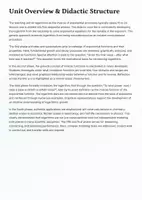


All materials included in this bundle are also available individually.
This bundle combines them into a coherent, curriculum-ready instructional sequence for upper secondary mathematics.
This complete teaching bundle supports students in developing a deep conceptual understanding of logarithms as the inverse of exponential functions.
Designed for bilingual (CLIL) classrooms, it integrates lesson starter, worksheets and teaching concept into one consistent learning pathway focused on modelling, interpretation and critical reasoning.
engaging introductory presentation
structured student worksheets
comprehensive teaching concept
modelling and real-world applications
differentiation and assessment guidance
exponential functions (review)
inverse functions
definition of logarithms
logarithmic laws
solving exponential equations
logarithmic scales
real-world modelling
Bilingualer Mathe-Unterricht (CLIL)
upper secondary mathematics
modelling-focused instruction
Keywords
Bilingualer Mathe-Unterricht, logarithms bundle, inverse functions CLIL, exponential growth decay, upper secondary mathematics
This in-depth presentation introduces logarithms as the inverse of exponential functions, focusing on conceptual understanding rather than rote calculation. Designed for upper secondary CLIL mathematics, it connects mathematical theory with real-world applications and scientific contexts. Didactic Focus Students learn to: understand inverse functions conceptually use logarithms to solve exponential problems interpret logarithmic scales correctly apply logarithmic laws meaningfully reflect on the limits of mathematical models Key Topics exponential functions review inverse functions definition of logarithms logarithmic laws doubling time and half-life logarithmic scales (pH, decibels, earthquakes) real-world applications misconceptions and model limits Classroom Use Bilingualer Mathe-Unterricht (CLIL) upper secondary mathematics applied and modelling-based lessons Best for CLIL and bilingual math classes concept-driven instruction real-world mathematical reasoning Keywords Keywords Bilingualer Mathe-Unterricht, logarithms CLIL, inverse functions math, exponential growth decay, upper secondary mathematics
Klassenstufen: EF (10./11. Jhg.), Q1 (11./12. Jhg.)
This fully developed teaching concept provides teachers with a clear, structured, and concept-driven framework for teaching logarithms in upper secondary mathematics. Logarithms are introduced not as abstract rules, but as the natural inverse of exponential processes, making the topic accessible, logical, and meaningful for students. Designed specifically for bilingual (CLIL) mathematics classrooms, the concept supports both language-sensitive instruction and deep mathematical understanding. Didactic Approach The teaching concept is built around a genetic and modelling-based approach. Students are guided step by step from exponential growth and decay to the necessity of logarithms as tools for answering “How long?” or “Which exponent?” questions. Key didactic principles include: conceptual understanding before formal rules strong links between representations (tables, graphs, formulas) real-world relevance and modelling systematic handling of common misconceptions differentiation for mixed-ability groups Structure of the Unit The unit covers approximately 16–24 lessons and includes: intuitive introductions using exponential contexts development of inverse functions definition and interpretation of logarithms derivation of logarithmic laws applications such as pH scale, decibels, earthquakes, and half-life reflection on model assumptions and limitations Best for Bilingualer Mathe-Unterricht (CLIL) upper secondary mathematics concept-based and modelling-oriented instruction Keywords Keywords Bilingualer Mathe-Unterricht, logarithms teaching concept, inverse functions CLIL, exponential growth decay, upper secondary mathematics
Klassenstufen: Q1 (11./12. Jhg.), Q2 (12./13. Jhg.)
This comprehensive teaching material introduces logarithms as the inverse of exponential functions, focusing on conceptual understanding and real-world applications rather than procedural memorisation. Designed for upper secondary CLIL mathematics, it supports students in building a deep and transferable understanding of logarithmic thinking. Didactic Focus Students will learn to: understand logarithms as inverse functions solve exponential equations conceptually apply logarithmic laws meaningfully interpret logarithmic scales correctly reflect on the limits of mathematical models Key Topics exponential functions (review) inverse functions definition of logarithms logarithmic laws doubling time and half-life logarithmic scales in real life modelling and interpretation Classroom Use Bilingualer Mathe-Unterricht (CLIL) upper secondary mathematics modelling-focused lessons applied mathematics Best for CLIL and bilingual math classes concept-driven instruction real-world mathematical reasoning Keywords Keywords Bilingualer Mathe-Unterricht, logarithms CLIL, inverse functions math, exponential growth decay, upper secondary mathematics
Klassenstufen: Q1 (11./12. Jhg.), Q2 (12./13. Jhg.)



Bewertungen und Kommentare