

5 Materialien
5 Materialien




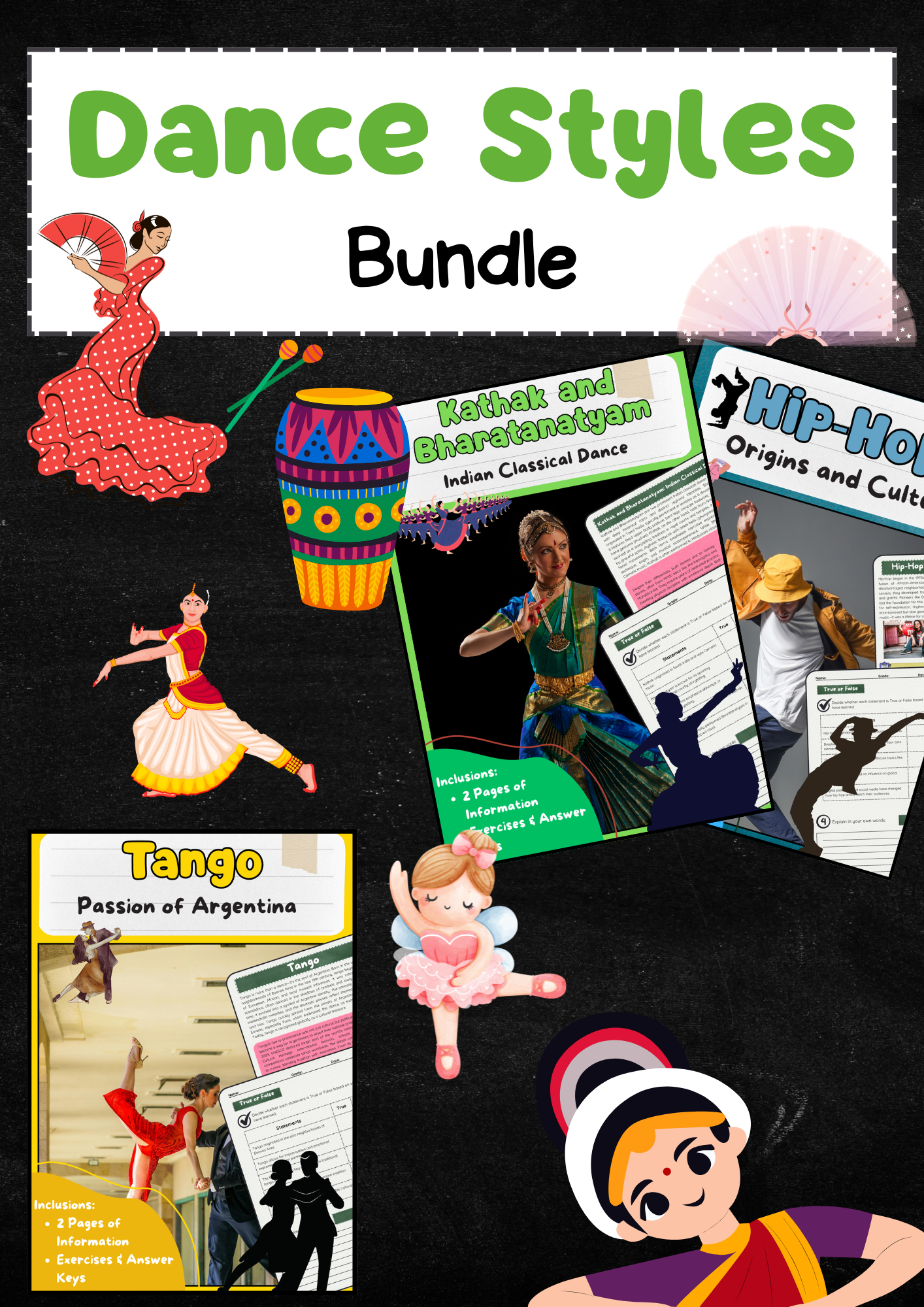
Explore the vibrant world of international dance styles with this comprehensive Global Dance Styles Teaching Bundle, perfect for cultural studies, performing arts, PE, and music-integrated classrooms. This unique collection introduces students to six diverse and engaging dance forms from different parts of the world. From the grace of French ballet, the fiery emotion of Argentine tango, the elegance of Indian classical dance (Kathak & Bharatanatyam), to the powerful rhythm of African traditional dances, the expressive flair of Spanish flamenco, and the cultural heartbeat of hip-hop dance, this bundle offers an immersive experience.
Each resource is designed for grades 5–10 and includes informative reading passages, comprehension questions, cultural background, worksheets, visual activities, and performance discussion prompts. Use it to teach world cultures through dance, enhance student global awareness, or to integrate dance history and music appreciation into your lesson plans.
Perfect for units on world traditions, multicultural studies, physical education, performing arts, social studies, or Black History Month. Whether you're covering dance genres, rhythmic movement, nonverbal communication, or global expression through the arts, this bundle has something valuable for your learners.
🎁 Includes the following resources:
Ballet: From France to the Globe
Tango: Passion of Argentina
Kathak and Bharatanatyam: Indian Classical Dance
Hip-Hop Origins and Culture
Traditional African Dance Forms
Dieses 9-seitige Unterrichtsmaterial behandelt das Thema Hip-Hop-Kultur, Hip-Hop-Geschichte, Bronx, DJing, MCing, Breakdance, Graffiti, Rap, soziale Gerechtigkeit, Protest, Identität, afroamerikanische Kultur, Bildung, Jugendförderung, Hip-Hop-Therapie, Schulunterricht mit Rap, globale Popkultur, Streetwear, Sprache, Subgenres wie Trap, Musik und Ausdruck, Hip-Hop-Ikonen wie Queen Latifah und Kendrick Lamar. Enthalten sind 4 Fließtexte, eine Lückentextaufgabe, ein Quiz mit Wahr/Falsch-Aussagen, eine Begriffserklärung, ein Wortverbindungsrätsel und 3 Leseverständnisfragen mit Lösungen. Geeignet für Klasse 8–11 im Englisch- oder Gesellschaftskundeunterricht.Tags:hip-hop, rap, DJing, graffiti, breakdance, hip-hop education, Bronx history, hip-hop therapy, youth culture, protest music, cultural studies, rap music, hip-hop classroom, trap music, hip-hop pioneers, DJ
Klassenstufen: 9-10. Klasse
This comprehensive 5-page resource explores traditional African dance forms, focusing on cultural practices, spiritual rituals, regional styles, drumming techniques, and storytelling movements. Includes continuous text for classroom reading and discussion. Covers West African Kpanlogo, Southern African Gumboot, and East African Ingoma, plus themes like rites of passage, healing dances, community participation, education through dance, and symbolic movement. Includes 2 comprehension questions, 5 true/false statements, and 1 definition task—all with solutions. Perfect for classes on African culture, ethnomusicology, world dance traditions, performing arts, or intercultural studies. Suitable for middle school and high school students.Tags: Traditional African Dance, African rituals, cultural expression, African drumming, Kpanlogo, Ingoma, Gumboot dance, storytelling in dance, African heritage, symbolic dance, African healing dance, rites of passage, spiritual dance Africa, African movement,
Klassenstufen: 8-9. Klasse
Unterrichtsmaterial zu Kathak und Bharatanatyam – zwei klassische indische Tanzformen. Inhalte zu Ursprung, Technik, Musik (Hindustani, Karnatik), Erzählkunst (Abhinaya), Devadasi-Tradition, Aufbau der Aufführungen (Alarippu, Jatiswaram, Thaat, Paran), sowie moderne Entwicklungen. Inklusive Aufgaben: Leseverstehen, Textproduktion, Wahr/Falsch, Begriffserklärung. Mit Lösungen. Ideal für den Einsatz im Musik-, Kunst-, Kultur- oder Ethikunterricht ab Sekundarstufe I/II.Tags (English & German):Indian classical dance, Kathak, Bharatanatyam, abhinaya, Indian culture, Carnatic music, Hindustani music, Indian dance costumes, Indian mythology in dance, devadasi, Indian heritage, classical storytelling, temple dance, Indian art education, Kathak footwork, Bharatanatyam postures, Alarippu, Jatiswaram, Thaat, Tukra, Paran, classical music India, Indian dance expressions, cultural identity India, dance in education, global dance traditions,
Klassenstufen: 7-8. Klasse
Dieses Unterrichtsmaterial zum Thema Ballett behandelt die französischen Ursprünge, den Einfluss von König Ludwig XIV., die Balletttechnik, die Rolle der Académie Royale de Danse und die weltweite Ausbreitung über Russland, England, Amerika, Asien und Afrika. Es beleuchtet klassisches Ballett, zeitgenössisches Ballett, Choreografie, kulturelle Vielfalt, globale Tanzformen und moderne Themen. Ideal für die Klassen 8–11 und fächerübergreifend in Englisch, Musik und Kulturkunde einsetzbar. Enthält 4 Infoseiten, Aufgaben mit Lückentext, Zuordnungen, Definitionen, Verständnisfragen und Lösungen.English DescriptionThis comprehensive 9-page teaching material on ballet explores its French origins, cultural evolution, and global influence. Students learn how King Louis XIV, the Académie Royale de Danse, and the French ballet system shaped the classical ballet tradition. They trace ballet’s journey from France to Russia, the UK, the US, and Asia, analyzing how it has adapted to various cultures, narratives, and modern themes. Key concepts include technique, choreography, global ballet styles, contemporary ballet, dance fusion, emotional storytelling, cultural diversity in ballet, and performance traditions. The material features 4 clear content pages, a detailed bullet-point summary, gap-fill, matching exercises, definition tasks, true/false quiz, and 3 comprehension questions with solutions. Ideal for grades 8–11, this resource strengthens reading comprehension, cultural literacy, and critical thinking through engaging content-area learning. Suitable for English, arts, or interdisciplinary classes. Perfect for both international schools and German curriculum.
Klassenstufen: 8-9. Klasse




Bewertungen und Kommentare