

eduki Qualität
60 Seiten
eduki Qualität
70 Seiten
12 Seiten
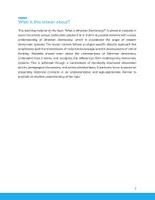
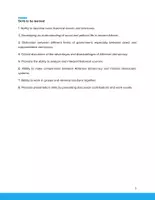


This extensive English-language bundle on Eduki offers educators a comprehensive, curriculum-aligned solution for teaching democracy, rights, institutions, and civic participation in grades 5 to 9. With over 200 pages of ready-to-use materials, the bundle includes more than 10 individual resources, all designed to support deep understanding of key social studies and civics concepts.
A major advantage of this collection is the significant time-saving factor: each resource is pre-structured, printable, and includes scaffolded tasks, vocabulary support, and clear layouts. No prep is needed – just download and use immediately in class.
Some of the included resources are...
🔗 The History of Democracy
From ancient Athens to modern democracies – reading & activities.
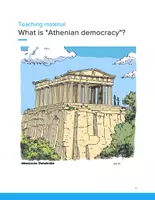
🔗 Athenian Democracy – Worksheet Resource
Explore civic life, institutions, and voting in ancient Greece.
🔗 I Have a Dream – MLK Speech Workbook
Analyze Martin Luther King’s iconic speech – bilingual edition.
🔗 Direct Democracy – Political Participation Workbook
Students explore referenda, initiatives and voting rights.
🔗 Germany’s Party System
Understand how party pluralism works in German democracy.
🔗 Freedom of the Press – Democratic Rights
Civic values and media freedom in democratic societies.
🔗 The March Demands of 1848
Historical revolutions and their influence on civil rights.
🔗 Germany’s Constitutional Bodies
Government structures and responsibilities clearly explained.
🔗 Key Political Laws in Germany
Legal basics for democracy and civic responsibility.
🔗 Germany’s Constitutional Principles
Rule of law, human dignity, and federalism made simple.
🔗 Germany’s Basic Law – Human Rights Workbook
Understanding the German constitution and its guarantees.
Thematically, the bundle spans a broad range of topics: from the origins of democracy in ancient Athens to modern constitutional principles, from the party system in Germany to press freedom and civil rights. This ensures teachers can use the materials flexibly – for single lessons, extended units, or project-based learning.
The resources also support cross-curricular and bilingual instruction, particularly in CLIL contexts. The English texts and tasks are carefully leveled to support both native and non-native speakers. Critical thinking, text analysis, and student-led discussions are encouraged throughout.
Students will benefit from a mix of historical context, contemporary relevance, and structured reflection. The tasks address multiple levels of Bloom’s taxonomy – from remembering and understanding to evaluating and creating.
For teachers aiming to enhance citizenship education with an international and historical perspective, this bundle is a complete and efficient toolkit. Whether in English-language schools or bilingual classrooms, it offers pedagogically sound, printable civics content that is academically rigorous yet accessible.
In short: this Eduki bundle equips you with powerful, structured content to teach democracy and civic engagement thoroughly and efficiently – with zero prep.
This workbook introduces students in Grades 5–9 to the concept of direct democracy. Using real-life examples and age-appropriate explanations, students explore how citizens can make political decisions through referendums, initiatives, and local votes—without representatives. Key topics include: What is direct democracy? How does it differ from representative democracy? Tools of direct democracy: referendums, citizen initiatives, petitions Advantages and risks of direct decision-making Global examples: Switzerland, Germany, U.S. states Included in the resource: reading text, glossary of political terms, quiz with answer key, case examples, group puzzle activity, and a creative task (e.g. design a public vote campaign) NEW: 6 additional worksheets with varied tasks for comprehension, reflection, and discussion. Use in Social Studies, Civics, or Ethics classes to spark engagement with real democratic processes and participation.
Klassenstufen: 8-9. Klasse
This resource offers students in Grades 5–9 a comprehensive introduction to Germany’s major political parties and their role in democratic life. It encourages understanding of political diversity, decision-making, and electoral systems. Key topics: Overview of all major parties in the Bundestag (e.g. CDU, SPD, Greens, FDP, AfD, Left Party, CSU) party histories, ideologies, and core principles how parties compete, form coalitions, and influence policy the legal role of political parties (Article 21 of the Basic Law) political categories: conservative, liberal, socialist, ecological, etc. Included: informative reading, glossary of key terms, a group puzzle task, case examples, a quiz with answer key, and a creative assignment (design your own party profile) NEW: 6 differentiated worksheets to support comprehension, reflection, and discussion across varying ability levels. Ideal for Social Studies, Civics, or Ethics – a great tool for learning how modern democracies function through political participation and pluralism.
Klassenstufen: 7-8. Klasse
Introduce your students to the German Constitution ("Grundgesetz"), a key foundation of democracy, civil rights, and the rule of law in modern Germany. This engaging and accessible workbook is perfect for Grades 5–9 and focuses on basic rights, democratic principles, and the historical background of Germany’s post-war constitution. Students will explore: the history of the Basic Law and the founding of the Federal Republic key articles and fundamental rights such as dignity, freedom of speech, and equality the structure of the state and the function of the Federal Constitutional Court how rights are protected and where they might conflict in daily life Included: a clear, informative reading text worksheets with questions at different levels of understanding real-life scenarios to discuss human rights in action a quiz with answer key a vocabulary reference page a creative group task: design a visual poster on basic rights Use this resource in Social Studies, Ethics, or History lessons to connect civic education with everyday life.
Klassenstufen: 7-8. Klasse
This resource introduces students in Grades 5–9 to the Frankfurt Parliament of 1848, Germany’s first national democratic assembly. Set during the revolutionary upheaval of the 19th century, students learn about the efforts made in the Paulskirche (St. Paul’s Church) to unify Germany through a constitution. Topics covered: the March Revolution and democratic hopes formation and composition of the Frankfurt Assembly debates over constitutional monarchy, civil rights, and national unity the creation and failure of the Paulskirchenverfassung (St. Paul’s Church Constitution) historical legacy of the assembly for future German democracy Included: historical reading text, glossary of political terms, quiz with answers, group puzzle (key figures of the assembly), real-life scenarios, and a creative task (e.g. draft your own preamble) NEW: 6 differentiated worksheets for deeper analysis, historical thinking, and discussion Perfect for History, Civics, or Social Studies – especially when teaching revolutions, democratic development, or German history.
Klassenstufen: 8-9. Klasse




Bewertungen und Kommentare