

eduki Qualität
74 Seiten
eduki Qualität
12 Seiten


Probability and Statistics: Tree Diagrams, Bayes, Binomial and Hypothesis Tests: this bundle contains 4 complete teaching resources with 102 PDF pages in total. Math Grades 11–13. All included resources are the English-language editions. They can be taught separately or selected to build a connected sequence around the named topics.
Use the individual packs to introduce concepts, practise subject vocabulary, compare examples and support written or practical outcomes. Select tasks according to learners’ prior knowledge and the level stated in each resource; the bundle is a collection of the listed complete products, rather than a newly sequenced textbook or a promise that every task suits every grade.
Conditional Probability and the Four-Field Table (2×2 two-way table): an English-language Mathematics teaching unit for Grades 11–13. How does additional information change the probability of an event, and how do we compute this reliably? Five worksheets connect explanatory texts, mathematical vocabulary and practice tasks with applying methods and interpreting results. Detailed solutions, a lesson plan and a classroom presentation accompany the student material.
The worksheets introduce the key concepts before learners use them in calculations and applications. Tasks ask pupils to explain a method, choose a suitable procedure, carry out the steps and justify or interpret the result. Core and optional tasks allow the teacher to select the amount of work and support. The aim is to connect a correct result with an understandable solution path.
Binomial distribution and expected value: an English-language Mathematics teaching unit for Grades 11–13. How likely is a certain number of successes, and what do we expect on average? Five worksheets connect explanatory texts, mathematical vocabulary and practice tasks with applying methods and interpreting results. Detailed solutions, a lesson plan and a classroom presentation accompany the student material.
The worksheets introduce the key concepts before learners use them in calculations and applications. Tasks ask pupils to explain a method, choose a suitable procedure, carry out the steps and justify or interpret the result. Core and optional tasks allow the teacher to select the amount of work and support. The aim is to connect a correct result with an understandable solution path.
Hypothesis test and significance test: an English-language Mathematics teaching unit for Grades 11–13. How can a claim about a probability be checked with justification from a sample? Five worksheets connect explanatory texts, mathematical vocabulary and practice tasks with applying methods and interpreting results. Detailed solutions, a lesson plan and a classroom presentation accompany the student material.
The worksheets introduce the key concepts before learners use them in calculations and applications. Tasks ask pupils to explain a method, choose a suitable procedure, carry out the steps and justify or interpret the result. Core and optional tasks allow the teacher to select the amount of work and support. The aim is to connect a correct result with an understandable solution path.
Probability – Fundamentals and Tree Diagrams: an English-language Mathematics teaching unit for Grades 11–13. How do we describe and calculate chance using probabilities and tree diagrams? Five worksheets connect explanatory texts, mathematical vocabulary and practice tasks with applying methods and interpreting results. Detailed solutions, a lesson plan and a classroom presentation accompany the student material.
The card examples use a 32-card Skat deck with four suits of eight cards. Other examples use coins, dice and urn models.
You receive the complete files of the listed individual products, with the worksheets, answers, teaching notes and presentations described in each listing. File formats and additional preparation vary by resource: consult each included product for its exact inventory. PDF page totals count the complete printable editions, including covers, teaching notes and answers; editable versions are not counted again as extra pages.
Preparation requirements and any teacher-provided equipment or media are stated in the individual resources. Review those notes before choosing practical activities.
Does this add new worksheets to the individual packs? No. This offer groups the named complete products. If you already own one or more, check the overlap before purchasing. Text, tasks, answers and the supplied cover graphics were fully created with AI. Source references and resource-specific notes are retained in the individual files. The resources have not been classroom tested.
Sum of individual prices: 84.96 €. Bundle price: 59.99 € (saving: 29.4%).
Binomial distribution and expected value: an English-language Mathematics teaching unit for Grades 11–13. How likely is a certain number of successes, and what do we expect on average? Five worksheets connect explanatory texts, mathematical vocabulary and practice tasks with applying methods and interpreting results. Detailed solutions, a lesson plan and a classroom presentation accompany the student material.What do the five worksheets cover?Bernoulli chain and binomial coefficientI recognise Bernoulli experiments, describe Bernoulli chains and compute the binomial coefficient C(n,k).Computing binomial probabilitiesI apply the formula P(X=k)=C(n,k)·p^k·(1−p)^(n−k) and compute individual probabilities.Applying cumulative probabilitiesI compute cumulative probabilities such as P(X≤k) and P(X≥k) and choose the appropriate approach.Analysing expected value and standard deviationI compute and interpret the expected value μ=n·p and the standard deviation σ=√(n·p·(1−p)).Word problems: quality control and moreI model real situations with the binomial distribution and assess the results critically.The worksheets introduce the key concepts before learners use them in calculations and applications. Tasks ask pupils to explain a method, choose a suitable procedure, carry out the steps and justify or interpret the result. Core and optional tasks allow the teacher to select the amount of work and support. The aim is to connect a correct result with an understandable solution path.What is included?Five worksheets with explanatory texts, mathematical vocabulary and differentiated tasks.A detailed answer and expected-outcome document with worked solution guidance.A teacher lesson plan with prerequisites, competencies, suggested phases, methodology, differentiation and preparation.A classroom slide deck.One combined printable PDF and a separate archive containing editable text documents and the presentation.Begin with a shared example and ask learners to identify what is known, what is being asked and which method fits. Compare solution approaches, make intermediate steps visible and then move to independent practice. Pair work can help pupils explain a choice and spot an error before checking against the solutions. The worked answers support both classroom discussion and targeted revision of a particular step.Preparation and classroom useFor the lesson the five worksheets are copied in sufficient numbers. A coin for the introduction, dice for examples if desired, and working calculators should be ready. A table of the cumulative binomial distribution eases the work in worksheet 3 and at the same time serves as differentiation material. The presentation with seven slides structures the lesson and records the central formulas. It is advisable to check the slides beforehand and to work through the most important examples on the board. A handout with the core formulas μ=n·p and σ=√(n·p·(1−p)) as well as the binomial formula can be distributed as a securing aid. Before the lesson the teacher should carry out the example calculations themselves in order to anticipate typical rounding questions and possible stumbling blocks. If a graphing calculator or spreadsheet is available, the cumulative distribution can also be demonstrated digitally, which increases vividness.Use the teacher plan to match the number of tasks, prerequisite knowledge and pace to the class. The editable files allow examples to be adjusted and additional working space or hints to be added. Where calculators, plotting tools or other classroom equipment are mentioned, provide the relevant tools according to the selected activities. The download supplies teaching documents and slides rather than software or equipment.Frequently asked questionsWhich language is included? This is the English edition; German files are not included. Are answers provided? Yes. Detailed sample answers and expected outcomes accompany the worksheets. Can I edit it? Text documents and the slide deck are supplied in editable form in the separate archive. Can I select individual worksheets? The files are organised by worksheet, so teachers can choose a section for focused practice or use the sequence together.Source and tool notes from the supplied material are retained. Texts, tasks, answers and design were generated with AI, as declared in the listing. PDF versions of the slides are included in the combined page count; identical editable versions are not counted again.Download size: 26 pages in the combined PDF. Slide pages are included in this count. The editable archive contains 7 text documents and 1 slide deck.
Klassenstufen: EF (10./11. Jhg.), Q1 (11./12. Jhg.)
Conditional Probability and the Four-Field Table (2×2 two-way table): an English-language Mathematics teaching unit for Grades 11–13. How does additional information change the probability of an event, and how do we compute this reliably? Five worksheets connect explanatory texts, mathematical vocabulary and practice tasks with applying methods and interpreting results. Detailed solutions, a lesson plan and a classroom presentation accompany the student material.What do the five worksheets cover?The idea of conditional probabilityI understand what a conditional probability expresses and can compute it with the formula P(A|B)=P(A∩B)/P(B).Filling in and evaluating the four-field tableI can fully complete a four-field table from absolute and relative frequencies and compute conditional probabilities from it.Switching between four-field table and tree diagramI can translate information between a four-field table and a tree diagram and apply the path rules correctly.Analysing stochastic independenceI can check whether two events are stochastically independent and interpret the result in context.Applications: medical test and Bayes’ theoremI can use the four-field table and Bayes’ theorem to tackle real questions such as the informative value of a test.The worksheets introduce the key concepts before learners use them in calculations and applications. Tasks ask pupils to explain a method, choose a suitable procedure, carry out the steps and justify or interpret the result. Core and optional tasks allow the teacher to select the amount of work and support. The aim is to connect a correct result with an understandable solution path.What is included?Five worksheets with explanatory texts, mathematical vocabulary and differentiated tasks.A detailed answer and expected-outcome document with worked solution guidance.A teacher lesson plan with prerequisites, competencies, suggested phases, methodology, differentiation and preparation.A classroom slide deck.One combined printable PDF and a separate archive containing editable text documents and the presentation.Begin with a shared example and ask learners to identify what is known, what is being asked and which method fits. Compare solution approaches, make intermediate steps visible and then move to independent practice. Pair work can help pupils explain a choice and spot an error before checking against the solutions. The worked answers support both classroom discussion and targeted revision of a particular step.Preparation and classroom useFor the lesson the five worksheets are copied in sufficient number, each with the corresponding solution part for the teacher. A set of example cards for the introduction with everyday situations is prepared. Calculators should be available but are not strictly necessary for most computations, since the numbers are chosen to be manageable. The presentation with seven slides serves the joint development and consolidation. It should be checked in advance for completeness and legibility and provided via a projector or interactive board. For the group work in the application part, posters or large sheets of paper are useful, on which four-field tables can be displayed clearly. Preparation includes working through the numerical examples once oneself in order to anticipate typical stumbling blocks. In particular the Bayes example with the small base rate should be mastered confidently by the teacher, so as to lead the discussion about the informative value of a positive test soundly and answer questions with assurance.Use the teacher plan to match the number of tasks, prerequisite knowledge and pace to the class. The editable files allow examples to be adjusted and additional working space or hints to be added. Where calculators, plotting tools or other classroom equipment are mentioned, provide the relevant tools according to the selected activities. The download supplies teaching documents and slides rather than software or equipment.Frequently asked questionsWhich language is included? This is the English edition; German files are not included. Are answers provided? Yes. Detailed sample answers and expected outcomes accompany the worksheets. Can I edit it? Text documents and the slide deck are supplied in editable form in the separate archive. Can I select individual worksheets? The files are organised by worksheet, so teachers can choose a section for focused practice or use the sequence together.Source and tool notes from the supplied material are retained. Texts, tasks, answers and design were generated with AI, as declared in the listing. PDF versions of the slides are included in the combined page count; identical editable versions are not counted again.Download size: 26 pages in the combined PDF. Slide pages are included in this count. The editable archive contains 7 text documents and 1 slide deck.
Klassenstufen: EF (10./11. Jhg.), Q1 (11./12. Jhg.)
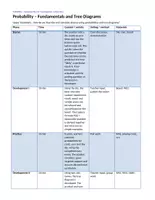
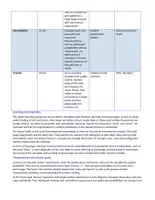
Probability – Fundamentals and Tree Diagrams: an English-language Mathematics teaching unit for Grades 11–13. How do we describe and calculate chance using probabilities and tree diagrams? Five worksheets connect explanatory texts, mathematical vocabulary and practice tasks with applying methods and interpreting results. Detailed solutions, a lesson plan and a classroom presentation accompany the student material.The card examples use a 32-card Skat deck with four suits of eight cards. Other examples use coins, dice and urn models.What do the five worksheets cover?Basic concepts and Laplace probabilityI can name the basic concepts of probability and determine the Laplace probability of simple events.Calculating simple probabilitiesI can calculate Laplace probabilities in various random experiments and use the complementary event to simplify calculations.Tree diagrams and path rulesI can represent multi-stage random experiments in a tree diagram and calculate probabilities using the product and sum rules.Analysing multi-stage experimentsI can distinguish drawing with and without replacement in a tree diagram and calculate compound events using the path rules and the complement rule.Applications from everyday lifeI can model everyday situations as random experiments, represent them in a tree diagram, and calculate and interpret probabilities with justification.The worksheets introduce the key concepts before learners use them in calculations and applications. Tasks ask pupils to explain a method, choose a suitable procedure, carry out the steps and justify or interpret the result. Core and optional tasks allow the teacher to select the amount of work and support. The aim is to connect a correct result with an understandable solution path.What is included?Five worksheets with explanatory texts, mathematical vocabulary and differentiated tasks.A detailed answer and expected-outcome document with worked solution guidance.A teacher lesson plan with prerequisites, competencies, suggested phases, methodology, differentiation and preparation.A classroom slide deck.One combined printable PDF and a separate archive containing editable text documents and the presentation.Begin with a shared example and ask learners to identify what is known, what is being asked and which method fits. Compare solution approaches, make intermediate steps visible and then move to independent practice. Pair work can help pupils explain a choice and spot an error before checking against the solutions. The worked answers support both classroom discussion and targeted revision of a particular step.Preparation and classroom useDice and coins in sufficient numbers, playing cards (a Skat deck), an urn with coloured balls and calculators are required. Worksheets WS1 to WS5 are prepared as a class set, supplemented by the presentation slides and the lesson plan. For consolidation, a document camera or board and space for tree diagrams should be planned in. Before the lesson, the teacher checks the completeness of the materials and prepares the urn with the known composition (e.g. 3 red, 2 blue balls). The solutions and the expected-answer horizon are kept ready in order to give targeted feedback during the working phases. Optionally, a simple simulation on the computer is available. For the consolidation phase, it is advisable to prepare an empty tree diagram as a slide or board image to be filled in together. Spare material for pair work as well as replacement pens and squared paper prevent friction losses. Anyone using a digital simulation tests it beforehand and plans a fallback without technology in case the devices are unavailable.Use the teacher plan to match the number of tasks, prerequisite knowledge and pace to the class. The editable files allow examples to be adjusted and additional working space or hints to be added. Where calculators, plotting tools or other classroom equipment are mentioned, provide the relevant tools according to the selected activities. The download supplies teaching documents and slides rather than software or equipment.Frequently asked questionsWhich language is included? This is the English edition; German files are not included. Are answers provided? Yes. Detailed sample answers and expected outcomes accompany the worksheets. Can I edit it? Text documents and the slide deck are supplied in editable form in the separate archive. Can I select individual worksheets? The files are organised by worksheet, so teachers can choose a section for focused practice or use the sequence together.Source and tool notes from the supplied material are retained. Texts, tasks, answers and design were generated with AI, as declared in the listing. PDF versions of the slides are included in the combined page count; identical editable versions are not counted again.Download size: 25 pages in the combined PDF. Slide pages are included in this count. The editable archive contains 7 text documents and 1 slide deck.
Klassenstufen: EF (10./11. Jhg.), Q1 (11./12. Jhg.)
Hypothesis test and significance test: an English-language Mathematics teaching unit for Grades 11–13. How can a claim about a probability be checked with justification from a sample? Five worksheets connect explanatory texts, mathematical vocabulary and practice tasks with applying methods and interpreting results. Detailed solutions, a lesson plan and a classroom presentation accompany the student material.What do the five worksheets cover?The idea of hypothesis testing: H0 and H1You understand what a hypothesis test is for and formulate the null hypothesis H0 and the alternative hypothesis H1 for a question.Determining the rejection regionYou fix the rejection and acceptance region for a significance level α and distinguish one-sided from two-sided tests.The test decision through examplesYou carry out the complete test decision for given situations and interpret the result correctly.Type I and type II errorsYou distinguish the type I and type II error, compute their probabilities and judge their importance.A complete test in contextYou plan and carry out a complete significance test for a realistic question and interpret the result.The worksheets introduce the key concepts before learners use them in calculations and applications. Tasks ask pupils to explain a method, choose a suitable procedure, carry out the steps and justify or interpret the result. Core and optional tasks allow the teacher to select the amount of work and support. The aim is to connect a correct result with an understandable solution path.What is included?Five worksheets with explanatory texts, mathematical vocabulary and differentiated tasks.A detailed answer and expected-outcome document with worked solution guidance.A teacher lesson plan with prerequisites, competencies, suggested phases, methodology, differentiation and preparation.A classroom slide deck.One combined printable PDF and a separate archive containing editable text documents and the presentation.Begin with a shared example and ask learners to identify what is known, what is being asked and which method fits. Compare solution approaches, make intermediate steps visible and then move to independent practice. Pair work can help pupils explain a choice and spot an error before checking against the solutions. The worked answers support both classroom discussion and targeted revision of a particular step.Preparation and classroom useThe series requires the five worksheets 1 to 5 with their solutions as well as a presentation of seven slides for the shared phases. Each learner needs a scientific calculator with a function for the binomial distribution, or alternatively a printed table of the cumulative binomial distribution for the values of n and p0 used. The teacher prepares a board sketch or slide with the flow chart of the test and has the example values used in the material ready, so that the calculations can be followed quickly in class. It is sensible to work through the central numerical examples in advance in order to know the boundaries of the rejection regions reliably. A document camera makes comparing learner solutions easier. This offer contains the English edition; the German version is not included.Use the teacher plan to match the number of tasks, prerequisite knowledge and pace to the class. The editable files allow examples to be adjusted and additional working space or hints to be added. Where calculators, plotting tools or other classroom equipment are mentioned, provide the relevant tools according to the selected activities. The download supplies teaching documents and slides rather than software or equipment.Frequently asked questionsWhich language is included? This is the English edition; German files are not included. Are answers provided? Yes. Detailed sample answers and expected outcomes accompany the worksheets. Can I edit it? Text documents and the slide deck are supplied in editable form in the separate archive. Can I select individual worksheets? The files are organised by worksheet, so teachers can choose a section for focused practice or use the sequence together.Source and tool notes from the supplied material are retained. Texts, tasks, answers and design were generated with AI, as declared in the listing. PDF versions of the slides are included in the combined page count; identical editable versions are not counted again.Download size: 25 pages in the combined PDF. Slide pages are included in this count. The editable archive contains 7 text documents and 1 slide deck.
Klassenstufen: EF (10./11. Jhg.), Q1 (11./12. Jhg.)



Bewertungen und Kommentare