


3 Materialien
49 Seiten


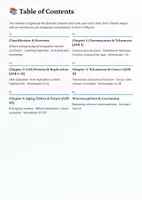


Why do human cells stop dividing?
How does telomerase enable cancer cells to bypass biological limits?
Can aging be slowed down scientifically?
This comprehensive upper secondary biology unit explores the molecular mechanisms of aging, telomere shortening, cellular senescence, and anti-aging research.
✔ 27 structured worksheets
✔ Differentiated cognitive levels (knowledge, analysis, evaluation)
✔ Case studies (telomeropathies & cancer)
✔ Diagram interpretation tasks
✔ Ethical debates on lifespan extension
✔ Anti-aging research evaluation
✔ Future scenarios (2030–2100)
✔ Lifestyle & telomere research
Telomere structure & shelterin
The end-replication problem
The Hayflick limit
Telomerase (TERT & TERC)
Cancer cell immortality
Epigenetic clocks
mTOR & sirtuins
Senescence & SASP
Therapeutic dilemmas of telomerase
Upper Secondary Biology
Genetics & Molecular Biology Units
Cancer & Aging Lessons
Advanced Academic Biology Courses
This unit encourages critical thinking, scientific reasoning, and ethical reflection.
This complete bundle provides a fully structured and academically rigorous teaching sequence on telomeres, aging, cancer biology, and ethical implications. Included: ✔ Structured presentation ✔ Comprehensive worksheet package ✔ Full 24-lesson teaching concept ✔ Differentiation pathways ✔ Debate format with role cards ✔ Assessment framework ✔ Misconception analysis Scientific Focus Cell cycle regulation DNA replication & telomere shortening Telomerase mechanism Cancer cell immortality Anti-aging research strategies Ethical reflection on lifespan extension Perfect For Upper Secondary Biology Advanced Molecular Biology Aging & Cancer Units Interdisciplinary Science Courses This bundle supports deep conceptual understanding and scientific reasoning.
Klassenstufen: EF (10./11. Jhg.), Q1 (11./12. Jhg.)



Bewertungen und Kommentare