


eduki Qualität
60 Seiten
eduki Qualität
70 Seiten
12 Seiten




👉 Please note: The individual resources are also available separately on the website. This bundle combines both into one coherent and classroom-ready teaching unit.
This complete bundle for upper secondary mathematics supports teachers in developing students’ ability to critically analyse and evaluate statistical information.
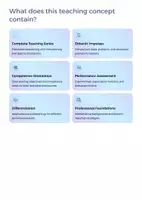
The teaching concept provides a structured framework for planning a full unit, including learning objectives, lesson sequencing, differentiation strategies, and assessment guidance. The teaching material offers authentic data examples, analysis tasks, discussion prompts, and reflection activities focusing on misleading graphs, biased samples, correlation vs. causation, and media statistics.
The bundle is particularly suitable for CLIL and bilingual classrooms, as it combines precise mathematical language with critical reasoning and real-world relevance.
A time-saving, concept-driven solution for teaching statistical literacy and critical thinking at upper secondary level.
👉 Please note: The website also offers linked bundle options combining this presentation with teaching materials and a complete teaching concept for coherent lesson planning. This presentation for upper secondary mathematics introduces students to the critical evaluation of statistical information, making it particularly suitable for CLIL and bilingual classrooms. Students learn why statistics appear authoritative and how this perceived objectivity can be used to mislead or manipulate. The presentation systematically explores common techniques such as distorted axes, selective data use, misleading visualizations, small sample sizes, and false causal claims. Through real-world examples from media, advertising, and politics, learners develop tools to evaluate diagrams, percentages, averages, and correlations. Reflection tasks and discussion prompts encourage critical thinking and evidence-based argumentation. This presentation is ideal for strengthening statistical literacy, media competence, and informed decision-making in upper secondary education. Resource type: Presentation Subject: Mathematics – Probability & Statistics Level: Upper Secondary (Grades 10–12 / CLIL)
Klassenstufen: Q1 (11./12. Jhg.), Q2 (12./13. Jhg.)
👉 Please note: The website also offers linked bundle options that combine this teaching material with a matching presentation and a complete teaching concept for a fully coherent teaching unit. This teaching material for upper secondary mathematics helps students develop the essential skill of critically reading, interpreting, and evaluating statistical information. In a world shaped by data, polls, and media statistics, the material supports learners in becoming statistically literate and critically reflective. Students work with authentic examples taken from media reports, surveys, and studies. They learn to identify misleading graphs, distorted axes, selective data use, small sample sizes, and the confusion of correlation and causation. Core statistical ideas such as representativeness, averages, percentages, and relative frequencies are revisited and applied in meaningful contexts. The material places strong emphasis on argumentation and evaluation. Learners are guided to question statistical claims, justify their judgments with data, and distinguish between sound conclusions and manipulation. Structured explanations, discussion prompts, and reflection tasks support language development in CLIL and bilingual classrooms. The resource includes tasks at different cognitive levels, cooperative learning activities, and transfer tasks linking mathematics to media literacy, social studies, and civic education. It is ideal for extended units, project-based learning, and exam preparation in upper secondary education. Resource type: Teaching material / worksheets Subject: Mathematics – Statistics & Probability Level: Upper Secondary (Grades 10–12 / CLIL)
Klassenstufen: Q1 (11./12. Jhg.), Q2 (12./13. Jhg.)
In an age dominated by data, charts, surveys, and percentages, students must learn far more than how to calculate statistical values. They need to understand, question, and critically evaluate statistical information. This comprehensive teaching concept for upper secondary mathematics (stochastics) is designed to do exactly that. This material provides a fully developed teaching sequence that enables students to analyse real statistical representations from media, politics, science, and advertising. Instead of focusing solely on computation, the concept emphasizes interpretation, critical reflection, and informed judgement — core competencies required for academic success and responsible citizenship. The teaching concept includes: a complete, structured lesson series with time planning clearly defined competency goals for basic and advanced courses didactic impulses, discussion starters, and authentic real-world examples guidance on differentiation between standard and advanced levels assessment formats, including exam tasks and detailed evaluation criteria professional background explanations and didactic reduction strategies Students learn to identify manipulation techniques such as misleading scales, selective data choice, unclear samples, and the confusion of correlation and causation. They also develop their own statistical representations and reflect on ethical responsibilities in data communication. This resource is ideal as: a standalone unit in upper secondary stochastics a supplement to hypothesis testing and inferential statistics a cross-curricular contribution to media literacy and critical thinking A powerful, academically sound resource for teachers who want to move beyond “calculating statistics” toward understanding statistics.
Klassenstufen: Q1 (11./12. Jhg.), Q2 (12./13. Jhg.)



Bewertungen und Kommentare