


3 Materialien
49 Seiten
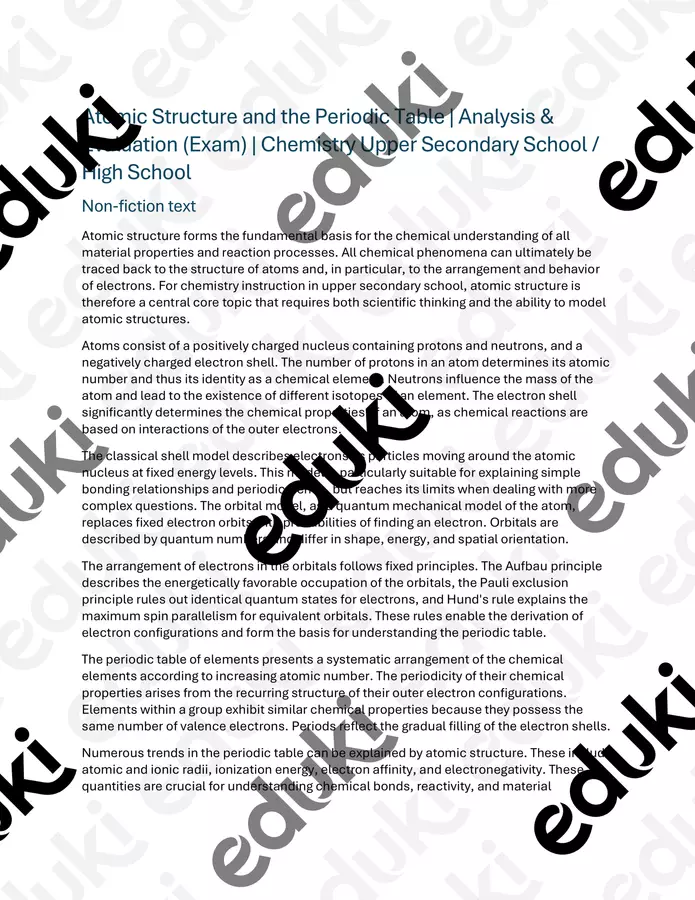

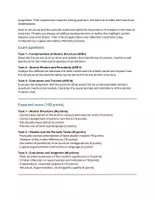


The “Atomic Structure and Periodic Table” test has been specifically designed for upper secondary chemistry and CLIL classrooms. It provides a didactically structured and academically rigorous assessment focusing on atomic models, electron configuration and periodic trends.
At the core of this resource is a comprehensive explanatory text that introduces atomic structure not merely as factual knowledge but as a model-based scientific concept. Students explore protons, neutrons, electrons, isotopes and the transition from shell models to quantum mechanical orbital models. This approach supports scientific literacy and conceptual understanding in bilingual learning contexts.
A key strength of this assessment is its focus on model competence. Students are guided to understand how the structure of the periodic table emerges from electron configurations and why periodic trends such as atomic radius or ionization energy can only be fully explained using quantum models. This fosters critical reflection on scientific models rather than rote memorization.
The test includes three structured tasks covering:
knowledge reproduction,
analytical comparison of atomic models,
and independent evaluation of the role of quantum mechanics in chemistry.
The detailed 100-point marking scheme ensures transparent assessment and makes the resource suitable for written exams, tests and diagnostic assessments in upper secondary education.
This resource is ideal for:
bilingual chemistry courses,
upper secondary exam preparation,
and concept-based chemistry teaching.
The Upper Secondary Chemistry Complete Bundle is a comprehensive, concept-driven assessment package designed specifically for bilingual (CLIL) and advanced English-language chemistry instruction. It combines all individual tests from this series into one coherent bundle, offering teachers a consistent, academically rigorous assessment framework across the entire upper secondary chemistry curriculum. Each test in this bundle is built around a detailed, continuous background text written in clear, subject-appropriate English. Rather than presenting isolated facts, the texts explain chemical principles in context, allowing students to develop scientific language competence while deepening conceptual understanding. This makes the bundle particularly suitable for CLIL classrooms, where subject learning and language development must go hand in hand. The tasks in every test follow a structured three-level progression: Level I focuses on factual understanding and correct use of terminology, Level II requires analysis of chemical processes and relationships, Level III challenges students to evaluate models, applications and implications of chemistry in real-world contexts. This structure ensures that students are not only assessed on knowledge, but also on analytical reasoning, scientific argumentation and evaluation skills, all of which are essential for upper secondary education. A key strength of the bundle is the detailed 100-point marking scheme included with every test. The marking guides clearly differentiate between content knowledge, structure of argumentation and use of subject-specific language. This supports transparent, reliable and competence-oriented assessment, particularly important in bilingual settings. Thematically, the bundle covers all major fields of upper secondary chemistry, including organic chemistry, biomolecules, enzymes, metabolic pathways and biotechnology. The consistent structure across all tests allows teachers to use the bundle flexibly – either sequentially over the school year or selectively for specific units. This bundle is ideal for teachers who: teach chemistry in English or CLIL contexts, value concept-based learning over rote memorization, want ready-to-use yet academically demanding assessments, and aim to strengthen both scientific and linguistic competencies.
Klassenstufen: EF (10./11. Jhg.), Q1 (11./12. Jhg.), Q2 (12./13. Jhg.)



Bewertungen und Kommentare