


5 Pagine
13 Pagine
11 Pagine
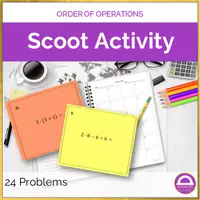


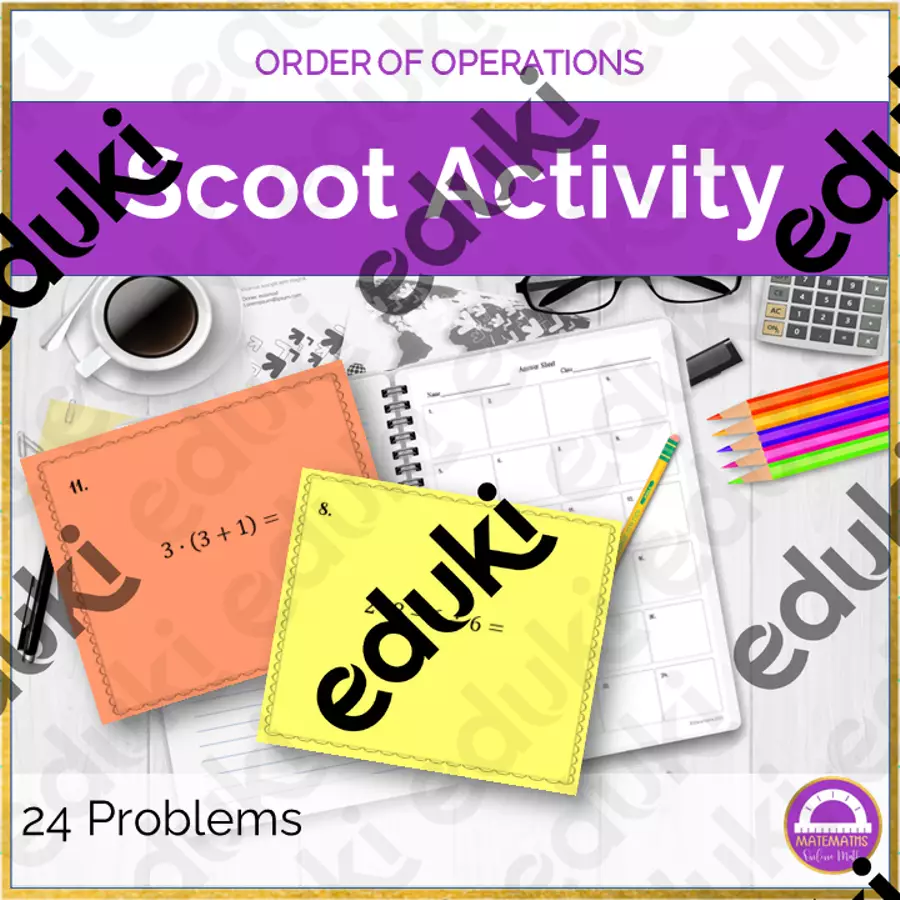


In questo gioco, gli studenti affronteranno una varietà di problemi che coinvolgono l’ordine delle operazioni e affineranno le loro abilità matematiche.
Questo set completo include 24 schede di attività, una dettagliata guida alle istruzioni di 1 pagina con esempio, un foglio di risposte e le soluzioni per una facile valutazione.
Ecco come funziona il gioco Scoot:
Inoltre, le schede di attività possono essere utilizzate in vari modi all’interno della tua classe. Ad esempio, prova l’approccio “EXIT SLIP”, dove uno studente seleziona una scheda e risolve il problema prima di lasciare la classe. Stampando le schede di attività su cartoncino colorato e plastificandole, puoi riutilizzarle anno dopo anno, massimizzando la loro durata e valore.
Ho classificato questa risorsa come inglese, ma non c'è bisogno di conoscere la lingua per utilizzarla: Le task cards contengono soltanto le espressioni.
Order of Operations Activity Task Cards | Scoot Game
Looking for exciting activities to enhance your students' problem-solving skills with order of operations? Introduce them to our innovative Scoot game, accompanied by task cards designed to captivate their interest.
In this game, students will tackle a variety of problems involving order of operations and sharpen their mathematical abilities.
This comprehensive set includes 24 task cards, a detailed 1-page instruction guide with example, an answer sheet, and solutions for easy grading.
Here's how the Scoot game works:
Simply distribute a question card to each desk, providing each student with an answer sheet and a pencil.
As students work through the problems, they record their answers on the answer sheet, ensuring they match the corresponding question number.
Allocate a specific time limit (such as 2 minutes) for each question, after which you'll announce "SCOOT."
When "scoot" is called, students swiftly move to the next desk with the subsequent question card, leaving their previous card behind.
They immediately begin working on the new question.
Once all students have completed the activity, the answers can be reviewed as a group, promoting a collaborative learning environment.
Additionally, task cards can be utilized in various ways within your classroom. For instance, try the "EXIT SLIP" approach, where a student selects a card and solves the problem before leaving the class. By printing the task cards on colored cardstock and laminating them, you can reuse them year after year, maximizing their durability and value.



Recensioni e commenti