


3 Pages
10 Pages
5 Pages
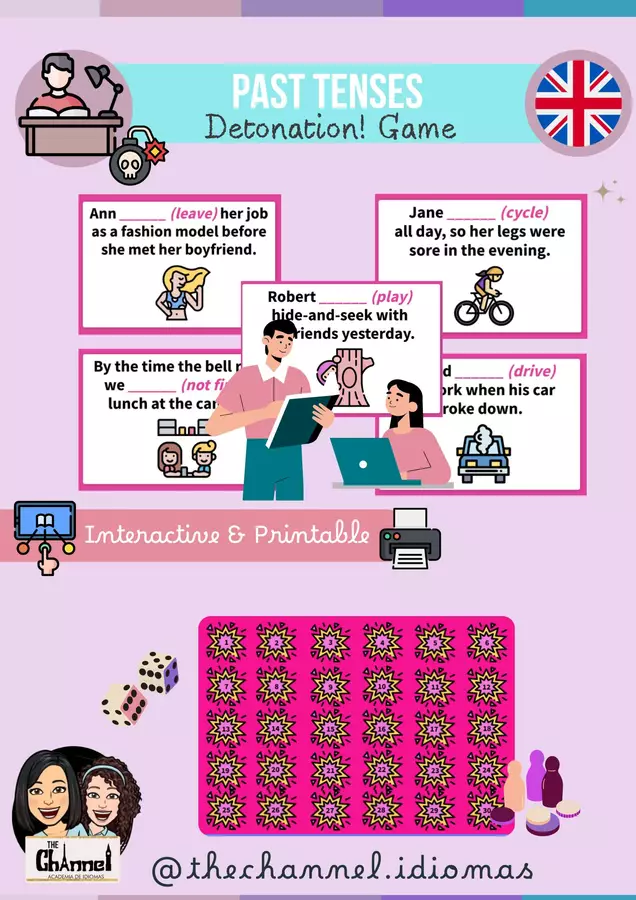
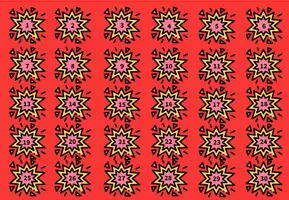
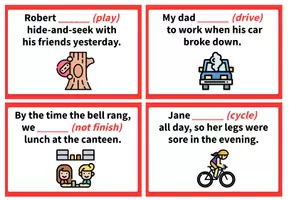


🇫🇷 Cette ressource contient un plateau avec 30 numéros et 30 cartes avec des phrases à compléter avec les temps passés suivants :
1. Past simple
2. Past continuous
3. Used to + infinitive
4. Past perfect simple
5. Past perfect continuous
Nous incluons également une version interactive pour jouer avec des appareils électroniques.
D'une part, ce jeu peut être joué comme un jeu de plateau traditionnel avec des pions et des dés. Dans ce cas, les étudiants, à tour de rôle, doivent lancer les dés et placer les pions sur la case correspondante. Ensuite, ils choisiront la carte correspondante et complèteront la phrase avec un temps du passé approprié (passé simple, imparfait, utilisé pour + infinitif, plus-que-parfait et plus-que-parfait continu).
D'autre part, il peut être adapté et joué en suivant les règles suivantes : dans ce cas, les fournitures suivantes seront nécessaires : bâtonnets en bois, marqueurs permanents ou autocollants pour écrire les numéros et les mots, un minuteur, et un récipient tel qu'un pot à crayons, un verre, une tasse ou un petit seau. Premièrement, il est nécessaire d'écrire les numéros et les mots sur les bâtonnets en bois ou de découper et coller les mots dessus. Ensuite, tous les bâtonnets doivent être placés dans le récipient.
Ce jeu peut être joué en paires ou en équipes. À tour de rôle, chaque étudiant doit prendre un bâtonnet du récipient et dire le mot ou faire une phrase correspondant à ce numéro. En plus des numéros, il faudra ajouter certains mots pour rendre le jeu plus amusant :
« Boum » = l'étudiant doit retourner tous les bâtonnets qu'il a collectés dans le récipient.
« Super Boum » = les deux équipes devront retourner tous les bâtonnets dans le récipient, et le jeu recommencera.
🇬🇧 This resource contains a board with 30 numbers and 30 cards with sentences to fill in the gaps with the following past tenses:
1. Past simple
2. Past continuous
3. Used to + infinitive
4. Past perfect simple
5. Past perfect continuous
We also include an interactive version to play with electronic devices.
On the one hand, this game can be played as a traditional board game with counters and dice. In this case, the students, in turns, have to roll the dice and place the counters on the corresponding square. Then, they will choose the corresponding card and they will complete the sentence with an appropriate past tense (past simple, past continuous, used to + infinitive, past perfect simple and past perfect continuous).
On the other hand, it can be adapted and be played following the rules of the next rules: In this case, the following supplies will be needed: popsicle sticks, permanent markers or stickers to write the numbers and the words, a timer, and a container such as pencil pot, glass, cup or a small bucket. Firstly, it is necessary to write the numbers and the words on the popsicle sticks or cut and glue the words on them. Then, all the sticks must be put in the container.
This game can be played in pairs or in teams. In turns, each student has to take a stick from the pot, and say the word or make a sentence which corresponds to that number. Apart from the numbers, you will need to add certain words to make the game more entertaining:
“Boom” = the student must return all the sticks that they have collected to the pot.
“Super Boom” = both teams will have to return all the sticks to the pot, and the game will start again.
“Steal 1” = The students will steal a stick from the opposite team.
“Exchange” = Both groups will exchange a stick.
“Bonus” = The team will keep the stick and will be allowed to take another one and play again.
“Miss a turn” = The team will miss a turn.
The winner of the game will be the team or the player that has collected the most sticks when the time runs out.
To make the game more challenging, apart from counting the sticks, the points of the numbers written on the sticks can be added. The winner will be the team who gets more points.



Évaluations et commentaires