

131 páginas
73 páginas


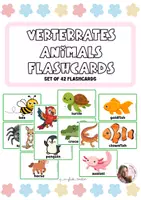


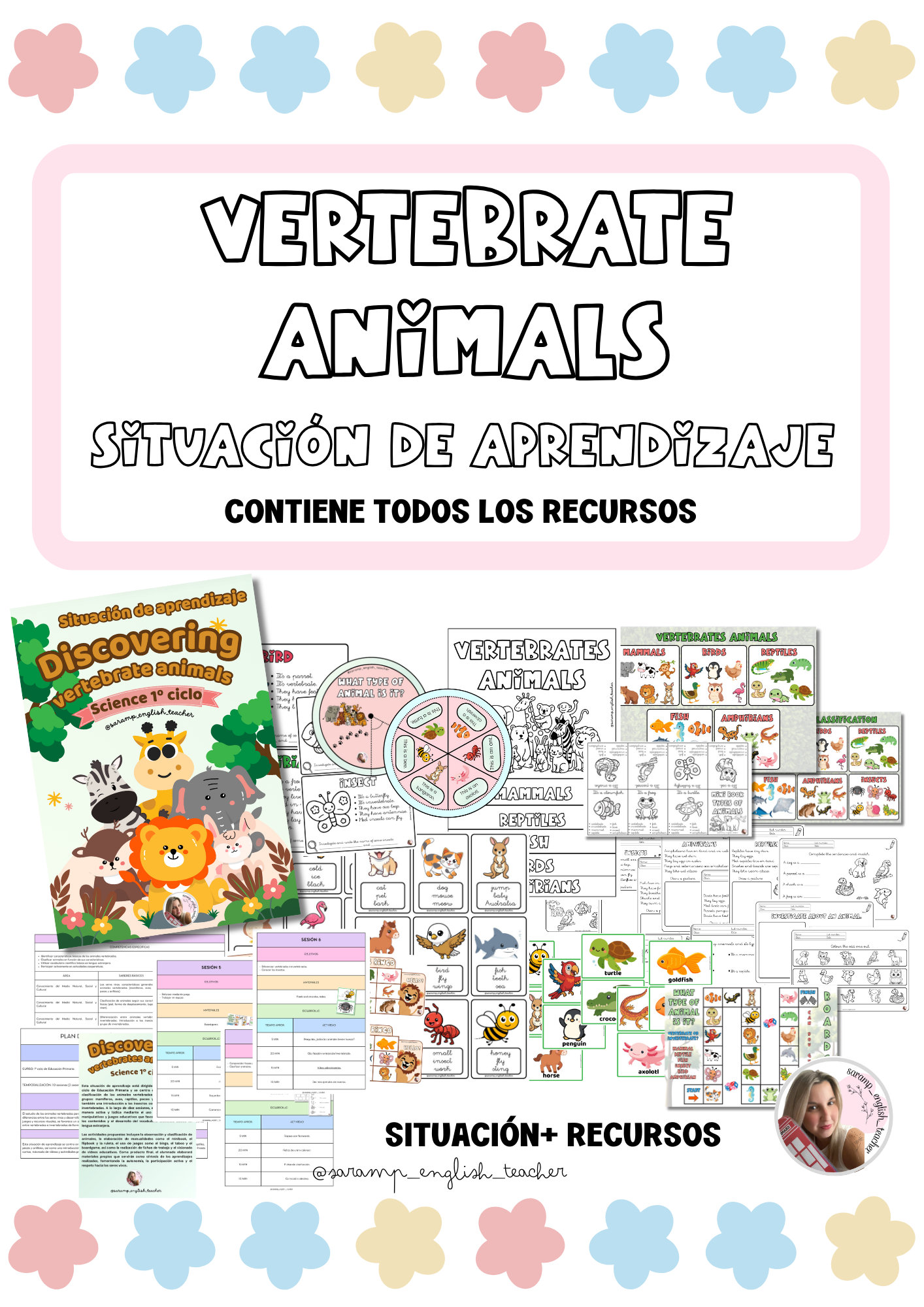
FULL PACK: Learning Situation + Resources (VIDEO)
Dive into the world of vertebrate animals with your first cycle Primary Education students through this complete learning experience, including all the resources you need for an engaging and hands-on exploration.
What’s included:
Learning Situation: Ten dynamic sessions (two per week), guiding students to explore and classify mammals, birds, reptiles, fish, and amphibians, with an introduction to insects as invertebrates.
Resources: A variety of materials to make learning visual, interactive, and playful: flashcards, manipulatives, minibook, flipbook, informative cards, board game, bingo, Taboo, worksheets, A3 posters, and links to educational videos.
Language support: Develops basic scientific vocabulary in English while learning about animals.
Final products: Students will create a minibook and flipbook, summarizing their knowledge creatively.
Skills and competencies developed:
Identify and classify animals by their main characteristics.
Use basic scientific vocabulary in English.
Understand the diversity of living beings and the natural world.
Foster respect for animals and their environment.
Promote active participation, cooperation, and autonomy.
This full pack is perfect to introduce the topic, review content, or carry out a complete project, ensuring a rich and motivating learning experience for your students.
This animal wheel is a hands-on resource designed to help students identify and review the main groups of vertebrate animals: mammals, birds, reptiles, fish and amphibians, with an introduction to insects.Students build their own wheel as a simple craft activity and then use it to play classification games. By spinning the wheel, they practise naming animals from each group and recognising their main characteristics.The wheel is available in colour and black & white versions, making it suitable for printing and classroom use. It supports active learning, vocabulary practice in English and student motivation through play and manipulation.It is ideal for whole-class activities, learning centres or small group work.
Curso: 1.-2. PRIM
These short reading cards are designed to help students learn about vertebrate animals and insects through simple and clear sentences. Each card includes a short text with basic information about one animal group, using child-friendly language and key Science vocabulary in English.The cards can be used for guided reading, matching activities, guessing games or oral practice. They are ideal for introducing new content, reinforcing learning or working in small groups and learning centres.The pack also includes blank templates, so students can create their own data cards by writing simple sentences about animals. This encourages reading comprehension, writing practice and active participation in Science lessons.These cards support early reading skills while helping students understand how animals are classified.
Curso: 1.-2. PRIM
This animal bingo game is designed to help students practise and review the main groups of vertebrate animals and insects in a fun and motivating way.The game includes 14 different bingo cards and 2 blank templates, allowing teachers and students to create their own cards. Students listen to the animal names or simple descriptions and mark the correct pictures on their bingo board.This activity helps develop listening skills, visual recognition and Science vocabulary in English. It can be used with the whole class or in small groups as a revision activity or learning centre.The bingo game encourages active participation and makes learning about animal classification enjoyable.
Curso: 1.-2. PRIM
Are you looking for a fun and educational activity for your English classes? With this Animal Taboo game, your students will learn new vocabulary and improve their descriptive skills in a playful way.What does this material include?30 animal cards ready to print and use.Each card features an animal with three or four "taboo" words that cannot be used to describe it.Perfect for practicing animal vocabulary and their characteristics, as well as developing speaking skills.Ideal for working in pairs or small groups, promoting interaction and collaborative learning.The illustrations are colorful and engaging—your students will love them!What will your students learn?With this material, your students will be able to:Expand their vocabulary related to animals and their characteristics.Improve their oral description skills, using synonyms and creative explanations.Develop active listening while trying to guess the animal described by their classmates.Reinforce the classification of animals into main groups such as mammals, birds, reptiles, amphibians, fish, and insects.Encourage teamwork and effective communication in the classroom.
Curso: 1.-2. PRIM



Valoraciones y comentarios