


−26%
60 Seiten
−26%
70 Seiten


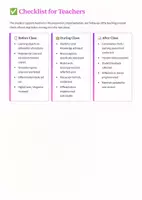


This comprehensive Pandemic Biology Bundle includes everything you need for a full multi-week unit on virus biology, epidemiology, and vaccination science.
Instead of piecing together materials, you receive a fully structured, competency-based teaching system.
✔️ Complete teaching framework (60+ pages)
✔️ Student worksheets (core + advanced differentiation)
✔️ Pandemic simulation game (SIR model in action)
✔️ Assessment tools & rubrics
✔️ Misconception correction modules
✔️ Graph interpretation training
✔️ Project-based learning options
Virus structure & replication cycles
Transmission routes
R-value & epidemiological modeling
Immune response mechanisms
Vaccination science (including mRNA vaccines)
Herd immunity thresholds
Virus mutation & variants
This is not just a content unit — it builds scientific literacy.
Students analyze data, evaluate public health measures, and challenge misinformation using real scientific reasoning.
Perfect for:
Middle school biology, life science, STEM, NGSS-aligned science courses.
A complete, structured, ready-to-teach pandemic unit that saves you hours of planning time.
This comprehensive English-language teaching resource provides a complete unit on pandemic biology, specifically designed for middle school students (Grades 6–8). Students will explore: ✔ What viruses are and how they differ from bacteria ✔ How infections spread and how transmission chains can be broken ✔ The meaning of the basic reproduction number (R₀) ✔ How the innate and adaptive immune systems work ✔ How vaccines function – including mRNA vaccines ✔ The concept of herd immunity ✔ Viral mutations and variants ✔ Media literacy and misinformation in health crises This resource combines scientific accuracy with age-appropriate explanations and promotes higher-order thinking skills. It includes: Structured chapters Reflection tasks Data interpretation exercises Ethical debate prompts Critical thinking challenges Case studies Exam-style review questions Students do not just memorize facts – they analyze, evaluate, and connect biological concepts to real-world societal questions. Perfect for: Biology units on immunology Health science lessons Cross-curricular projects Pandemic education modules Inquiry-based learning A scientifically rigorous, student-friendly and highly relevant resource for modern science classrooms.
Klassenstufen: 7-8. Klasse
This engaging teaching presentation explores how viruses spread and how the human immune system protects us. Designed for lower secondary students (Grades 6–8), it combines scientific accuracy with age-appropriate explanations and interactive reflection tasks. Students Learn: • What viruses are (and why they are not considered fully “alive”) • How viruses infect cells • How the infection chain works • What the reproduction number (R-value) means • How mutations create variants • How innate and adaptive immunity differ • How antibodies neutralize pathogens • Why vaccines train the immune system • What herd immunity means • The difference between epidemic, pandemic, and endemic The material includes structured reflection prompts, mini-activities, and real-world examples (handwashing, masks, vaccination). Perfect for: Middle school biology Health education Interdisciplinary science units Pandemic literacy & media competence A scientifically grounded yet accessible resource that empowers students to understand global health events instead of fearing them.
Klassenstufen: 7-8. Klasse
How do you teach pandemics scientifically – without oversimplifying complex biology? This comprehensive “Biology of a Pandemic” teaching framework provides a structured, competency-based approach for middle school students (ages 12–15). Students explore: Virus structure and classification Lytic vs. lysogenic cycles Infection dynamics & transmission routes The R-value and SIR model Innate vs. adaptive immune response Vaccination mechanisms (including mRNA vaccines) Herd immunity thresholds Virus variants and natural selection What makes this resource stand out: ✔️ Strong focus on scientific literacy and misconception correction ✔️ Built-in pandemic simulation game (SIR-based learning) ✔️ Differentiation model (Core Module + Advanced Module + Project Option) ✔️ Diagram analysis training ✔️ Ethical discussions & argumentation tasks ✔️ Assessment rubrics and competency-based grading ✔️ Cross-curricular integration (Math, Ethics, Geography, Data Literacy) Students do not only memorize facts — they learn to: • interpret epidemiological graphs • evaluate protective measures • understand how vaccines work • critically analyze misinformation Perfect for: Biology, Health Science, NGSS-aligned science classes, interdisciplinary STEM projects. This resource supports real scientific thinking and builds long-term conceptual understanding — not just content recall.
Klassenstufen: EF (10./11. Jhg.), Q1 (11./12. Jhg.)



Bewertungen und Kommentare