


−26%
60 Seiten
−26%
70 Seiten





Upgrade your upper secondary physics curriculum with a comprehensive, modern, and academically rigorous resource bundle.
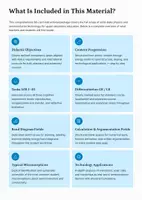
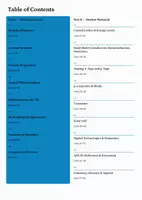
This 20-unit Physics Mega Bundle combines advanced topics from theoretical physics, modern cosmology, quantum mechanics, information theory, and energy physics into one structured, ready-to-teach package.
• Relativity – spacetime, time dilation, length contraction
• Quantum mechanics & probability interpretation
• Particle physics & the Standard Model
• Plasma physics & nuclear fusion
• Gravitational waves & astrophysics
• Nonlinear systems & chaos
• Information theory & entropy
• Experimental design & modeling in physics
• Cosmology & structure of the universe
• Additional advanced contemporary physics modules
Each unit includes:
✔ Full teaching framework
✔ Structured student worksheets
✔ Multi-level cognitive tasks (conceptual, quantitative, evaluative)
✔ Differentiation for standard and advanced courses
✔ Worked examples & scaffolding
✔ Graph analysis & modeling tasks
✔ Real-world applications (AI, digital communication, energy systems)
Instead of purchasing individual resources, you receive:
✔ 20 complete, high-level teaching units
✔ Hundreds of tasks and problems
✔ Strong mathematical and conceptual depth
✔ Exam preparation alignment
✔ Significant cost savings compared to single purchases
Perfect for advanced STEM programs, international upper secondary courses, and academically ambitious physics classes.
Bring modern physics into your classroom – coherent, rigorous, and future-oriented.
How do stars form? Why do galaxies move away from us? And what evidence supports the Big Bang model? This comprehensive teaching unit on Astrophysics and Cosmology provides a fully developed curriculum framework and student material for upper secondary physics courses. It combines conceptual understanding, scientific reasoning and quantitative applications in a structured and progressive way. The unit covers: Gravitation & Kepler’s Laws Star formation & nuclear fusion Hertzsprung–Russell diagram Stellar evolution & supernovae Black holes & neutron stars Spectral analysis & Doppler effect Redshift & Hubble’s Law Big Bang model & cosmological evidence Dark matter & dark energy Designed for both basic and advanced physics courses, the material includes: ✔️ Tasks aligned with cognitive levels (knowledge, application, evaluation) ✔️ Quantitative exercises for advanced students ✔️ Scientific model analysis & evidence-based reasoning ✔️ Diagram interpretation & calculation fields ✔️ Structured lesson planning (18–24 lessons) Students do not only learn astrophysical facts — they learn how scientific models are constructed, evaluated and critically discussed. Perfect for: Upper secondary physics courses Pre-university exam preparation IB / A-level inspired courses Advanced STEM programs A complete, academically rigorous and classroom-ready resource for modern physics education.
Klassenstufen: EF (10./11. Jhg.), Q1 (11./12. Jhg.)
Bring modern semiconductor physics into your upper secondary classroom with this comprehensive 60-page teaching unit on solid state physics and band theory. This fully structured resource guides students from atomic energy levels to energy bands, band gaps, doping, p-n junctions, transistors and solar cells. It is carefully differentiated for standard and advanced courses and aligned with international upper secondary curricula. What makes this resource powerful? ✔ Clear conceptual progression (atom → crystal → band structure → devices) ✔ Activities across Bloom’s taxonomy (recall, analysis, evaluation) ✔ Band diagram sketching fields ✔ Structured calculation sections (band gap energy, photon wavelength, conductivity) ✔ Common misconceptions explicitly addressed ✔ Temperature dependence of conductivity ✔ Doping (n-type / p-type) explained conceptually and quantitatively ✔ Sustainability and ethical dimension of semiconductor production Students do not only memorize definitions – they learn how to use the band model as an analytical tool to explain real-world technologies such as LEDs, microchips and photovoltaic cells. Perfect for: IB Physics A-Level Physics AP-aligned advanced courses STEM enrichment University preparation This unit transforms abstract quantum concepts into tangible technological understanding and promotes deep conceptual reasoning rather than superficial learning.
Klassenstufen: EF (10./11. Jhg.), Q1 (11./12. Jhg.)
This comprehensive instructional package provides a fully structured 60-card unit on superconductivity and macroscopic quantum phenomena, designed for upper secondary physics (Grades 11–13). The material combines a detailed teaching conception with student worksheets and covers all competency levels from basic reproduction to advanced evaluation. Students explore the full conceptual arc of superconductivity: electrical resistance in metals, critical temperature, the Meissner effect, Cooper pairing, BCS theory, Type-I and Type-II superconductors, flux quantization, vortex states, and technological applications. What makes this resource exceptional: ✔ Clear conceptual progression from classical conduction models to macroscopic quantum coherence ✔ Integrated differentiation for standard and advanced courses ✔ Structured diagram spaces (R–T curves, H–T phase diagrams, magnetic field-line modeling) ✔ Explicit misconception diagnosis and correction ✔ Evaluation-based tasks aligned with higher-order thinking skills Applications such as MRI systems, superconducting magnets, maglev trains, and power transmission cables are analyzed not only physically but also in terms of sustainability and energy efficiency. Students learn to move from theoretical models to technological judgment — a key competence for exam success. Perfect for: Advanced high school physics courses Exam preparation Pre-university STEM programs Inquiry-based and competency-oriented instruction A complete, academically rigorous teaching unit ready for immediate classroom use.
Klassenstufen: EF (10./11. Jhg.), Q1 (11./12. Jhg.)
This bilingual upper secondary physics resource develops a structured and conceptually rigorous approach to nuclear physics and radioactive decay. Students explore nuclear structure, decay processes, half-life calculations, exponential modeling, radiation types, medical applications and ethical evaluation of nuclear energy. The unit integrates scientific reasoning and mathematical modeling using: N(t) = N₀ · e^(−λt) λ = ln(2) / T₁/₂ E = Δm · c² CLIL-oriented academic language is embedded throughout. Didactic Aim Students learn to: describe nuclear stability apply decay equations interpret exponential graphs distinguish activity and dose evaluate radiation risks connect physics to medical and societal contexts Conceptual clarity and structured argumentation are central. Contents Nuclear structure Alpha, beta and gamma radiation Decay equations Half-life calculations Exponential decay Activity (Bq) Radiation dose (Sv) Medical imaging and therapy Nuclear fission Risk evaluation Tasks cover multiple cognitive levels and support bilingual STEM instruction. Classroom Use Complete nuclear physics unit CLIL upper secondary courses Exam preparation Advanced STEM programs Best for Upper Secondary Physics CLIL programs Advanced high school science Keywords bilingual nuclear physics unit radioactive decay worksheets half-life calculations CLIL physics material radiation dose lesson nuclear energy evaluation upper secondary physics exponential decay teaching
Klassenstufen: EF (10./11. Jhg.), Q1 (11./12. Jhg.)




Bewertungen und Kommentare