


30 Seiten
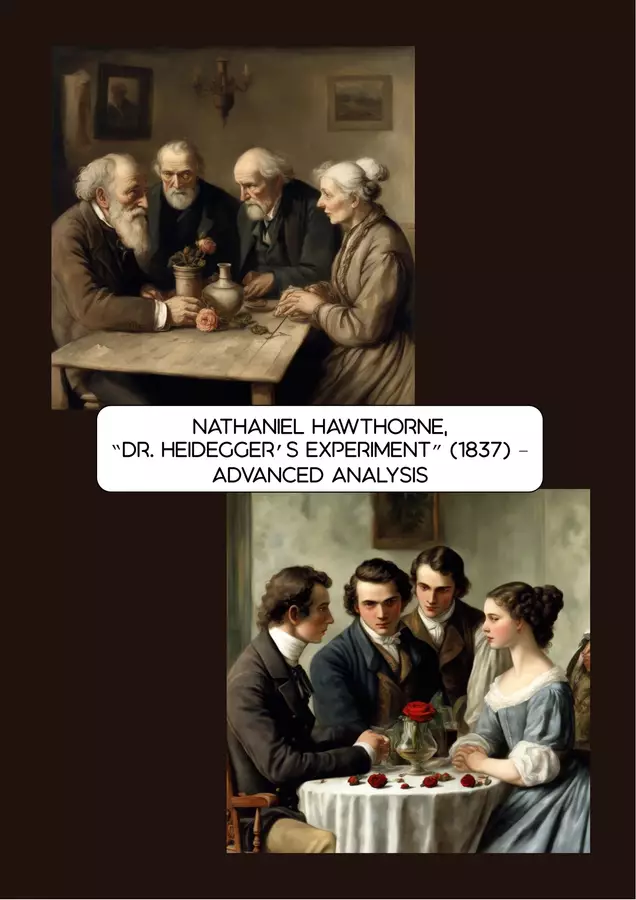
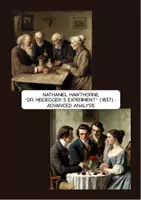
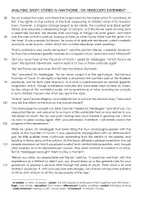


In this document, you will find an advanced analysis of N. Hawthorne's brilliant short story "Dr. Heidegger's experiment" (1837) — ideal for teaching literature or for preparing your students for their final exams.
The document comprises...
These questions encourage EFL students to think critically about the characters, themes, and literary devices used in "Dr. Heidegger's experiment," while also helping them improve their language skills through analysis and interpretation.
Level: B2
If you need more background information about analyzing short stories, I recommend my document "The Advanced Guide to Analyzing short stories" here on eduki.
The 19th century is full of wonderful literature! Even decades before the French movement of naturalism began (as a counter movement to romanticism) where authors like Balzac, Flaubert, Zola and Maupassant picked out as a central theme a super detailed and and brutally honest description of things as they were, some English and US writers had done so by simply writing about their contemporary societies.It was a time where scientific discoveries and far-away countries with their exotic setting / influences were considered as something fanscinating and scary at the same time. Think of all those wonderful novels like Frankenstein (1818), The Strange Case of Dr Jekyll and Mr Hyde (1886), The Picture of Dorian Gray (1890), The Time Machine (1895), the Conan Doyle mysteries!Another big issue was the class system and how to climb the social ladder. In contrast to the 18th century where social criticism had to be disguised by satire, it was the authors' heartfelt wish from the 19th century on to point out bluntly the grievance of contemporary society with Charles Dickens as the figurehead.Join our journey through social criticism with the included short stories by Nathaniel Hawthorne, Oscar Wilde and D.H. Lawrence (56 pages of text + analysis)!
Klassenstufen: EF (10./11. Jhg.), Q1 (11./12. Jhg.), Q2 (12./13. Jhg.)



Bewertungen und Kommentare