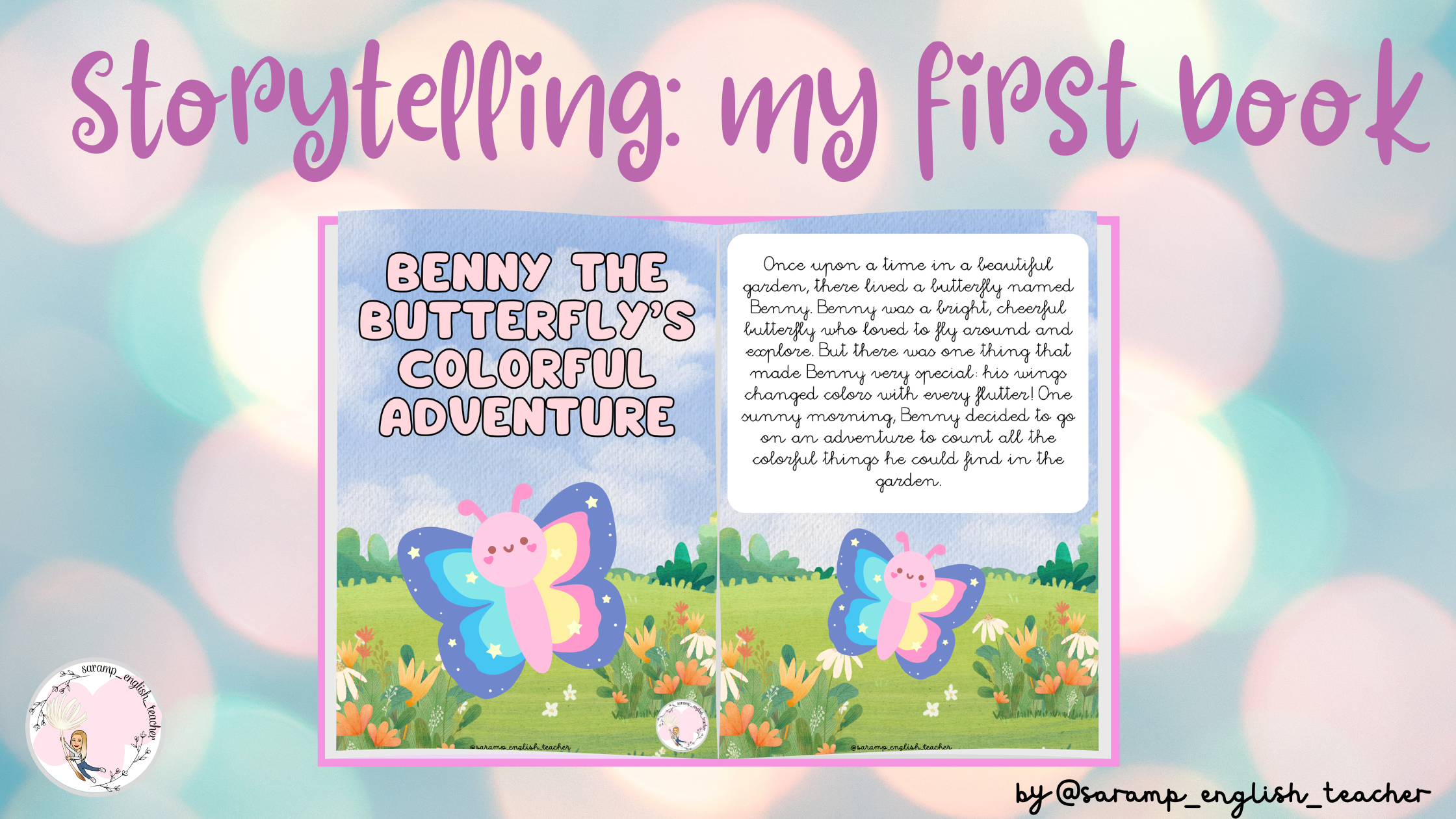
Through the story of "Benny the Butterfly's Colorful Adventure," young children will learn several foundational concepts in a fun and engaging way. Here’s a breakdown of what kids will learn:
1. Colors:
Color Recognition: The story introduces five basic colors: red, yellow, blue, green, and purple. As Benny’s wings change color with each chapter, children are prompted to recognize and identify these colors.
Association of Colors with Objects: By connecting colors to specific objects in the garden (red roses, yellow daisies, blue berries, green leaves, and purple flowers), children learn to associate colors with the world around them. This reinforces color recognition in a real-world context.
2. Numbers:
Counting Skills: The story teaches children how to count from one to five. Each chapter includes counting exercises with different items in the garden (one bumblebee, two ladybugs, three bluebirds, four frogs, five butterflies). This repetitive structure helps reinforce number recognition and counting skills.
Quantity Recognition: By seeing the corresponding number of objects (e.g., three red roses, four green leaves), children learn to recognize quantities visually. This helps build a basic understanding of numbers and amounts.
3. Vocabulary and Language Development:
New Words: The story introduces vocabulary related to colors, garden objects, and numbers. Words like "bumblebee," "daisies," "bluebirds," and "frogs" enrich children's language skills.
Descriptive Language: Phrases such as "fluttered his wings," "buzzing around," and "singing in a tree" help children understand descriptive language and develop their imagination.
4. Concept of Diversity and Uniqueness:
Appreciating Differences: By emphasizing the uniqueness of each color and the different things Benny encounters, children learn to appreciate diversity in the world around them. This idea that every color and number is special, "just like Benny," can help promote a sense of self-worth and acceptance of differences.
5. Sequencing and Story Structure:
Understanding Sequences: The story follows a predictable sequence (color change → discovery of objects → counting), which helps children understand and anticipate what comes next. This understanding of sequences is an essential skill for early literacy and cognitive development.
Story Progression: By following Benny’s journey, children learn how stories are structured with a beginning, middle, and end. They can see how Benny's adventure unfolds step-by-step, which helps in understanding story arcs and narrative flow.
6. Engagement and Focus:
Interactive Elements: The story can be interactive. As you read, you can encourage children to count along, guess the next color, or identify colors in their surroundings, which helps maintain their attention and engagement.
Curiosity and Exploration: Benny’s adventure promotes curiosity and exploration, encouraging children to think about their environment, the colors, and the numbers they see daily.
7. Emotional Connection and Empathy:
Character Bonding: By creating a lovable character like Benny, children are more likely to engage emotionally with the story, helping them develop empathy and a connection to what they’re learning.
Positive Reinforcement: The story ends on a happy note, reinforcing a positive attitude towards learning and discovery.
8. Memory and Recall:
Repetition for Learning: The repetitive nature of the story (Benny finds objects of a certain color and counts them) helps reinforce memory and recall. This repetition makes it easier for young children to remember the colors and numbers.
By engaging children with an exciting character and colorful visuals, the story provides a holistic learning experience that combines basic educational concepts with emotional and imaginative development.
Etiquetas: storytelling, storytime, reading for kids, reading, book, ebook
Si te ha gustado el artículo del blog, haz clic en el corazón. Esto nos ayuda a ofrecer artículos de interés para nuestra comunidad de docentes.
El autor saramp_english_teacher ofrece 861 materiales sobre Inglés / English, Material interdisciplinario y 22 otros temas, por ejemplo: