

6 páginas
131 páginas
73 páginas


Flores: Manualidad Fácil + Tarjetas Didácticas Este material es perfecto para explorar el mundo de las flores de una manera divertida y creativa. A través de manualidades y tarjetas didácticas, los estudiantes aprenderán sobre diferentes tipos de flores mientras desarrollan habilidades artísticas y lingüísticas. Objetivos de Aprendizaje Identificar y nombrar diversas flores en inglés. Desarrollar habilidades motoras finas mediante la creación de manualidades. Fomentar la creatividad a través de actividades artísticas. Mejorar la comprensión del vocabulario relacionado con la naturaleza. ¿Qué Incluye Este Material? Tarjetas didácticas con imágenes y nombres de flores. Plantillas para colorear y crear flores. Habilidades que Desarrollarán los Estudiantes Reconocimiento de palabras y vocabulario en inglés. Creatividad y expresión artística. Trabajo en equipo y colaboración durante las actividades grupales. Conexión con la naturaleza y el medio ambiente. Este material no solo es educativo, sino también una forma divertida de involucrar a los estudiantes en el aprendizaje. ¡Anímate a incorporarlo en tus clases y observa cómo florecen sus habilidades!
Curso: EI
This educational activity is designed for young children (ages 3-4) to help them learn about animals and their habitats in a fun and interactive way. The material includes cut-and-paste exercises where kids can sort animals based on where they live—water, air, or land.Through this hands-on activity, children develop fine motor skills, enhance their understanding of nature, and improve their ability to classify and recognize different animals. The spring-themed illustrations make learning engaging and enjoyable for little learners.Ideal to celebrate Spring Equinox (March 20th).
Curso: EI
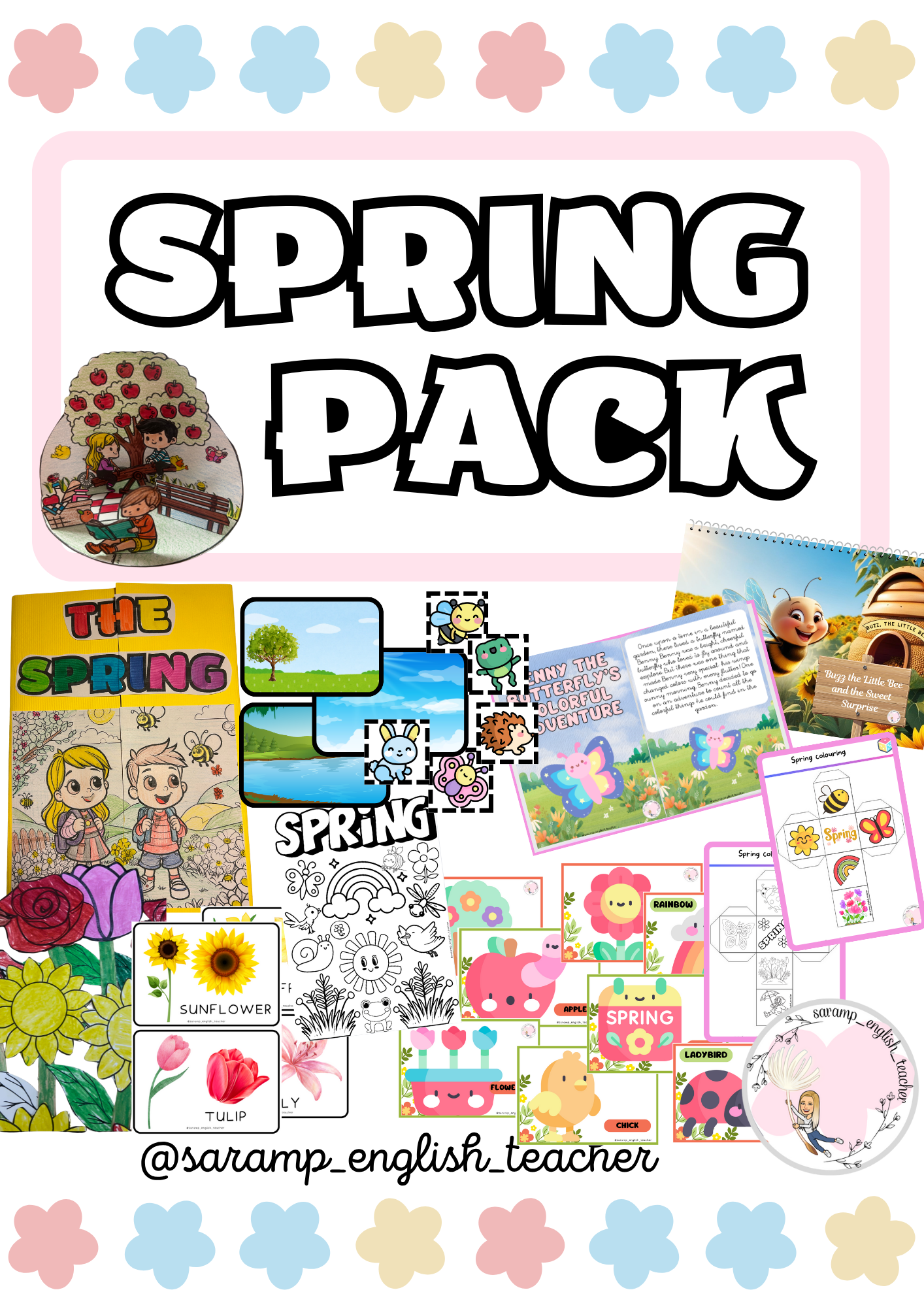
It is a collection of 38 spring-themed flashcards.. It includes vocabulary related to springtime, nature, animals, gardening, and weather. Some of the words featured in the flashcards are tree, wheelbarrow, watering can, squirrel, snail, rose, rainbow, rabbit, ladybird, frog, Easter bunny, butterfly, birdhouse, bee, and more.
Curso: EI, 1.-4. PRIM
Escena 3D de Primavera Este material creativo invita a los estudiantes a explorar la primavera a través de una manualidad divertida y educativa. Con esta actividad, los y las estudiantes desarrollarán habilidades artísticas y de colaboración mientras crean su propia escena 3D. ¡Es una forma genial de aprender y disfrutar al mismo tiempo! Objetivos de Aprendizaje Fomentar la creatividad y la expresión artística. Desarrollar habilidades motoras finas a través del recorte y pegado. Promover el trabajo en equipo y la colaboración entre compañeros. Conocer y apreciar la naturaleza y los cambios de estación. Mejorar la comprensión de conceptos espaciales mediante la creación de una escena tridimensional. ¿Por Qué Elegir Este Material? Este recurso no solo es educativo, sino que también es una excelente manera de conectar con los y las estudiantes. Les permite explorar su creatividad mientras aprenden sobre la primavera. Además, es fácil de implementar en el aula y se adapta a diferentes estilos de aprendizaje. ¡Anímate a probarlo y observa cómo florecen las ideas de tus estudiantes!
Curso: 1.-4. PRIM




Valoraciones y comentarios