

SEE DESCRIPTIONS BELOW
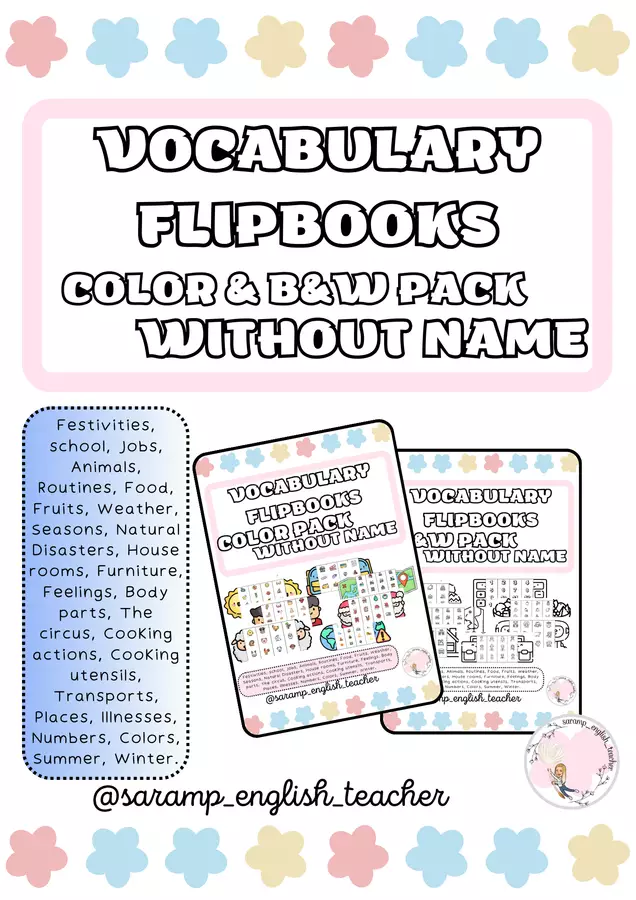
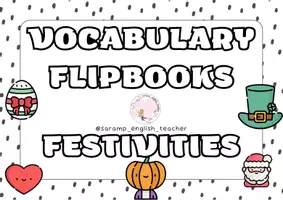
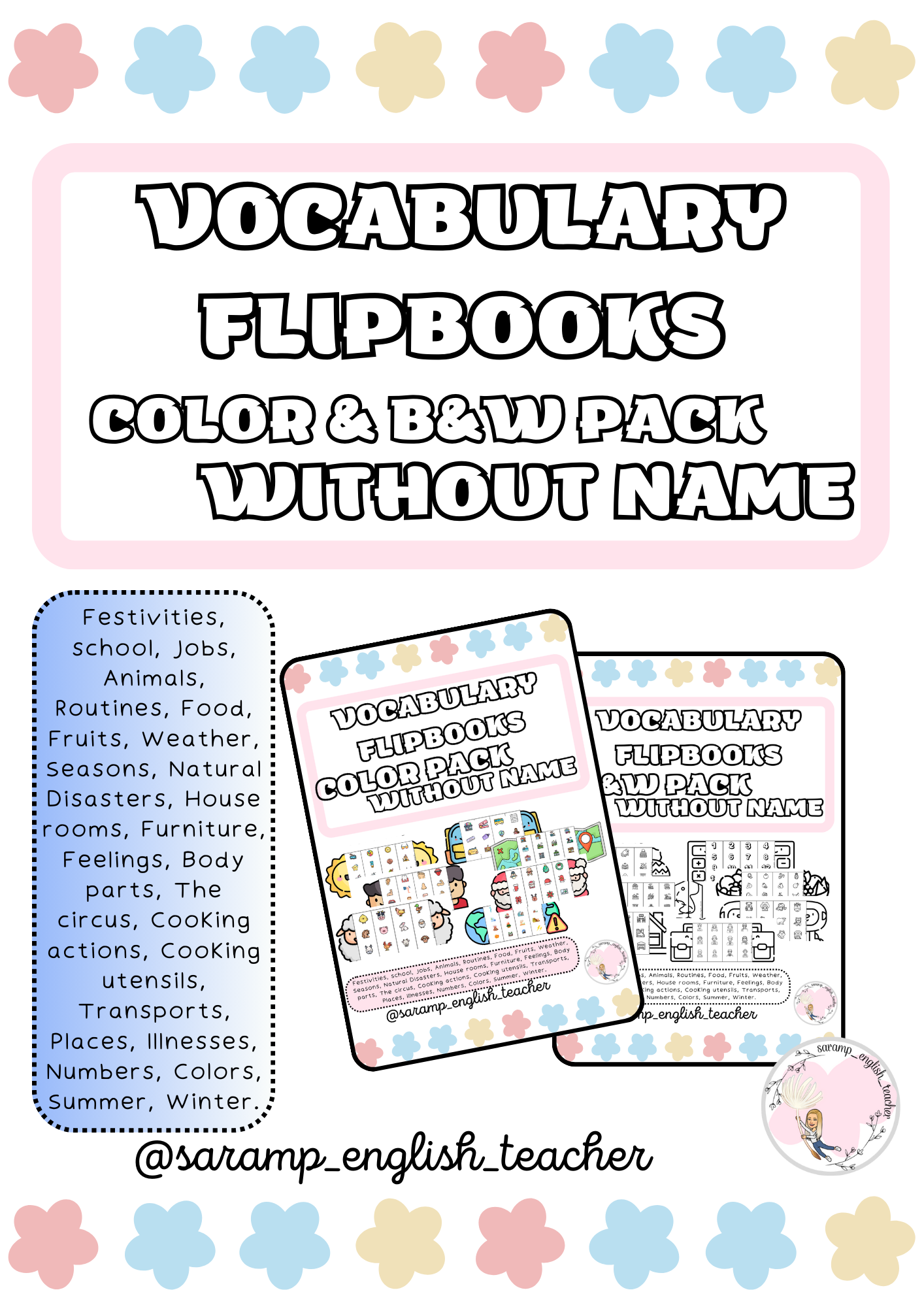
This Vocabulary 40 Flipbooks Pack is a versatile educational resource designed to help learners expand their vocabulary in a fun and engaging way. It consists of 40 different flipbooks, each representing a specific theme or topic, and each flipbook is available in two versions: with color and without words. This allows for multiple levels of learning and flexibility in how you use it. Here’s a detailed breakdown of the resource and suggestions on how to use it:Key Features:Diverse Topics: The pack covers a wide range of everyday topics, from animals and food to jobs, weather, and emotions. This variety ensures that learners encounter relevant and useful vocabulary in multiple contexts.With Color and Without Words:With Color: Each flipbook features bright, engaging illustrations of items related to the specific theme. This version is great for learners to visually associate words with images, making it easier to remember and recall vocabulary.Without Words: These flipbooks are designed without text, so learners can try to recall and write down the appropriate words themselves, promoting active learning and vocabulary recall.Educational Versatility: The flipbooks can be used by students of different ages and levels. Whether you’re teaching beginners, young children, or learners of a second language, this resource adapts to various learning needs.How to Use This Resource:Vocabulary Building:Flashcards: Print the flipbooks (with color or without words) and use them as flashcards. Show the picture (with or without words) and ask the learners to say or write the word that matches the image. This can be done individually or in groups.Matching Game: Mix up the flipbooks and have learners match the words to the correct image. This is especially useful if using the "without words" version, as learners can test their recall of vocabulary.Theme-Based Learning:Each flipbook represents a specific theme (like "Animals," "Seasons," "Weather," etc.), so you can focus on one theme at a time. For example, during a unit about "Animals," you could introduce the "Animals" flipbook, show the illustrations, and have the learners name or describe the animals. This can be paired with speaking exercises, creative writing, or storytelling.Interactive Activities:Story Creation: Have learners use the flipbooks to create their own stories or descriptions. For instance, after reviewing the "Cooking Actions" and "Cooking Utensils" flipbooks, they could describe how to make a recipe using the vocabulary from the flipbooks.Role Play: Use the "Jobs" and "Feelings" flipbooks to create role-playing scenarios. Students can act out different professions or express various emotions, helping with both vocabulary recall and speaking skills.Memory & Recall Exercises:Use the flipbooks as part of memory challenges. Show the pictures (with or without words) and let students try to recall as many words as they can. This can be timed for extra challenge.Ask learners to group or categorize the words based on similarities, such as grouping “Fruits,” “Animals,” and “Food,” which can help reinforce their knowledge of different categories.Writing Prompts:The flipbooks can serve as a source of writing inspiration. Have students write sentences or short paragraphs using the vocabulary words from the flipbooks. For example, using the “Seasons” flipbook, they can write about their favorite season and explain why using the vocabulary words they’ve learned.Group Activities & Games:Use the flipbooks for group discussions or games. For example, divide students into groups and give each group a different flipbook. They can compete to see which group can correctly name the most items from their flipbook.Pictionary: Students can use the flipbooks to play Pictionary, drawing items from the themes, while the rest of the class guesses.Benefits of Using This Resource:Engagement: The colorful illustrations capture students' attention, keeping them engaged while learning.Flexible Learning: Whether used as a standalone resource or incorporated into larger lesson plans, the flipbooks provide flexibility for teachers and learners alike.Active Learning: The version without words encourages active recall and independent thinking, which is excellent for reinforcing memory.Creative Exercises: Encourages creativity through activities like role-playing, storytelling, and writing prompts.Suggestions for Teachers:Consider rotating through different themes based on the needs of your learners. You might spend a week focusing on "Animals" and "Weather," then move on to "Food" and "Seasons" the next.Combine the flipbooks with other resources (such as worksheets or videos) to deepen learning on each topic.Use the wordless flipbooks for assessment—ask students to name and write down as many words as they can recall from each theme.By using this resource, you can create a dynamic and interactive learning environment that caters to visual, auditory, and kinesthetic learners, making vocabulary acquisition a more exciting and memorable experience.
Curso: 1.-6. PRIM
This pack includes 40 flipbooks on a variety of everyday topics, but this time, the flipbooks are black and white (no color). The flipbooks feature simple line drawings for each theme, and you can use them in combination with or without the words, depending on your needs. This resource is designed for a more minimalist approach, allowing students to focus purely on the vocabulary and concepts.Key Features:Diverse Topics: The pack still covers the same wide range of topics, including:FestivitiesSchoolJobsAnimalsRoutinesFoodFruitsWeatherSeasonsNatural DisastersHouse RoomsFurnitureFeelingsBody PartsThe CircusCooking ActionsCooking UtensilsTransportsPlacesIllnessesNumbersColorsSummerWinterBlack and White Illustrations: The flipbooks contain simple line drawings or black-and-white illustrations for each theme. This can be great for activities like coloring, allowing students to personalize the images, or using the illustrations as simple visual prompts.No Words: The flipbooks can be used without words, allowing for greater focus on recall, spelling, and active engagement with vocabulary. This encourages independent learning and strengthens memory as learners recall words without assistance.How to Use This Resource:Vocabulary Building:Flashcards: You can print the flipbooks and use them as flashcards. Present the illustration to the students and ask them to identify or say the corresponding word. This is excellent for younger learners or beginners who are still connecting images with words.Self-Testing: For a more advanced challenge, use the flipbooks without words. Ask the students to write the correct word based on the image. This works well for vocabulary recall and spelling practice.Drawing and Coloring:Personalize the Illustrations: Since the flipbooks are in black and white, you can ask students to color or add details to the illustrations. This helps reinforce learning by actively engaging with the vocabulary in a creative way.Creative Drawing Exercises: After reviewing a particular flipbook, encourage students to draw their own version of the objects or scenes depicted, helping them connect with the vocabulary.Theme-Based Learning:Focused Lessons: Use one flipbook at a time to introduce and discuss a specific topic. For example, with the "Animals" flipbook, show the image of an animal and ask students to say or write down its name in the target language.Storytelling: After reviewing a theme (such as "Jobs" or "Feelings"), ask students to create a short story using the vocabulary. The flipbook images can act as visual prompts to help them recall words while writing or speaking.Active Recall and Reinforcement:Memory Games: Print multiple copies of the flipbooks (or just the images) and use them in a memory game. Spread out the pictures and ask students to match words to images or vice versa. This works particularly well with the "without words" version.Quiz Time: Ask students to take turns showing the images and quizzing their peers on the vocabulary. This promotes active recall and peer learning.Writing and Speaking Prompts:Sentence Construction: Use the images as prompts for students to build sentences. For instance, show a flipbook image of "Fruits" and ask students to write sentences like "I like apples" or "Bananas are yellow."Descriptive Writing: After reviewing a theme (like "Feelings"), ask students to describe how they feel using vocabulary from the flipbook.Group Activities and Games:Pictionary or Charades: Use the black-and-white illustrations in a game of Pictionary. Students can draw or act out the items from the flipbooks while others guess. This is great for kinesthetic and visual learners.Role-Playing: For topics like "Jobs" or "House Rooms," you can have students role-play different professions or household tasks using the vocabulary they’ve learned.Assessment & Reinforcement:Spelling Bee: Use the wordless flipbooks to conduct a spelling bee. Show the image, and students need to spell the word correctly.Test Recall: After working with a set of flipbooks, give a quiz where students have to write the vocabulary words for each image. You can also ask them to categorize words (e.g., group "Food" and "Fruits" together).Benefits of Using the Black-and-White Flipbooks:Engagement Through Simplicity: The lack of color allows students to focus entirely on the concept and vocabulary, making it easier for them to remember.Customizable: Students can engage more deeply by adding their own colors, drawings, and designs to the images, enhancing their connection to the vocabulary.Enhanced Recall: The absence of text on some flipbooks encourages students to recall vocabulary independently, which is effective for reinforcing memory.Flexible Activities: The simple black-and-white format allows you to adapt the materials for various activities—whether for younger children to color or older students to write and describe.Suggestions for Teachers:Incorporate Other Learning Materials: Pair the flipbooks with other learning resources like vocabulary worksheets or interactive videos to give a well-rounded learning experience.Scaffold Learning: Start with the "with words" flipbook and gradually move to the "without words" version as students become more comfortable with the vocabulary.Encourage Peer Learning: Have students work together in pairs or small groups to identify and describe the images, promoting collaborative learning.By using the Vocabulary 40 Flipbooks Pack (Without Color), you can create an interactive and flexible learning environment that encourages independent vocabulary recall, creativity, and active engagement. This resource is great for a wide range of educational settings, from young learners to more advanced students.
Curso: 1.-6. PRIM





Valoraciones y comentarios