

34 páginas
10 páginas
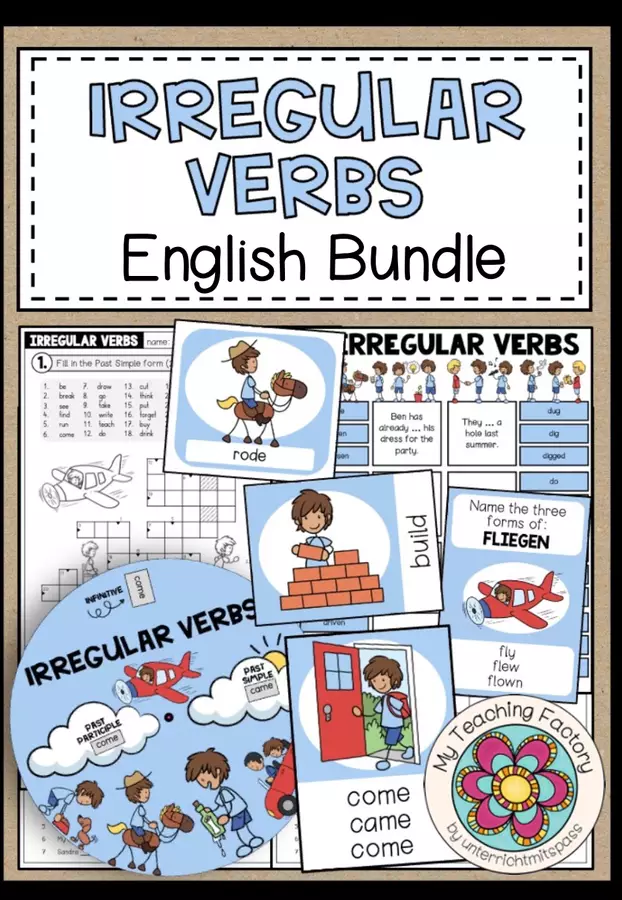


The bundle ‘Irregular Verbs’ is a collection of materials on the topic of ‘Irregular Verbs’ for English lessons.
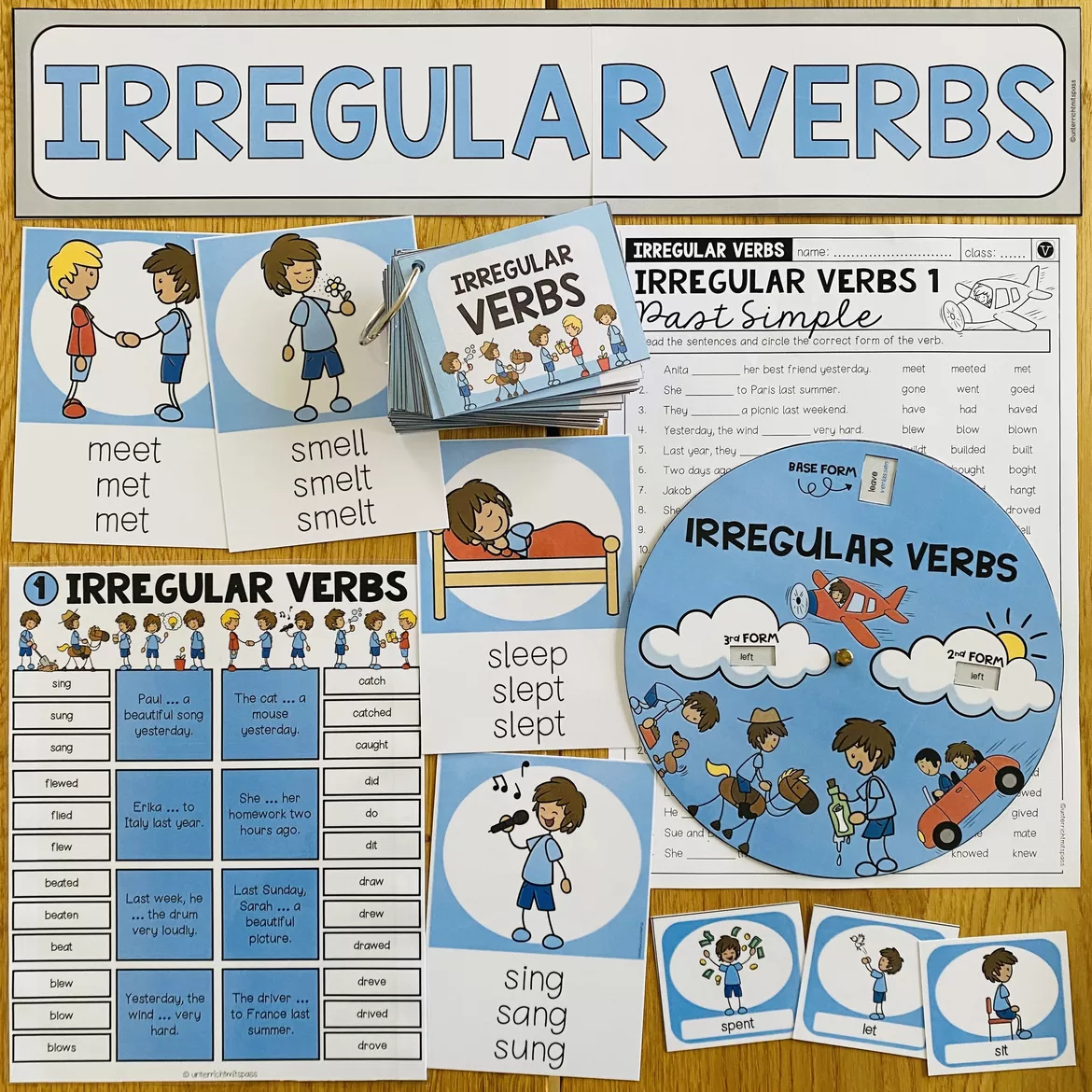
The focus is on a wide range of exercises for learning and consolidating the three forms.
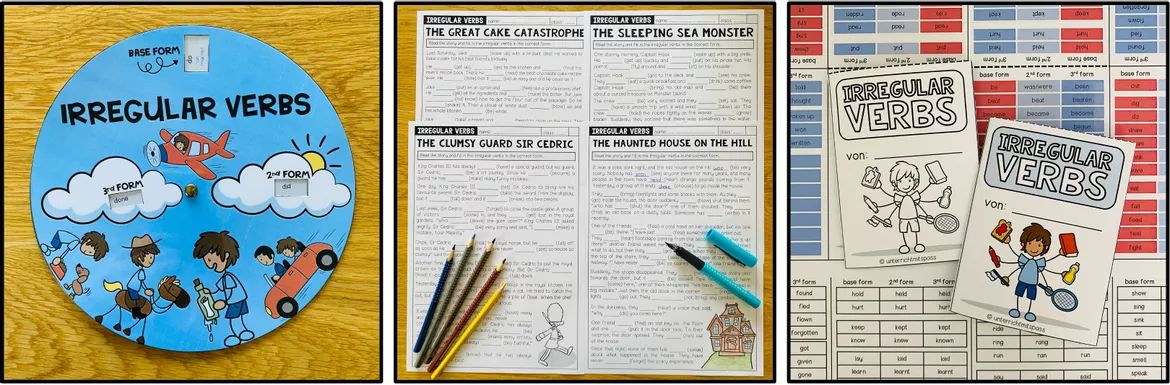
In order to enable individualised learning and teaching, many components of the bundle are included in a version with infinitive and past tense and a version with all three forms.
The bundle consists of the following components:
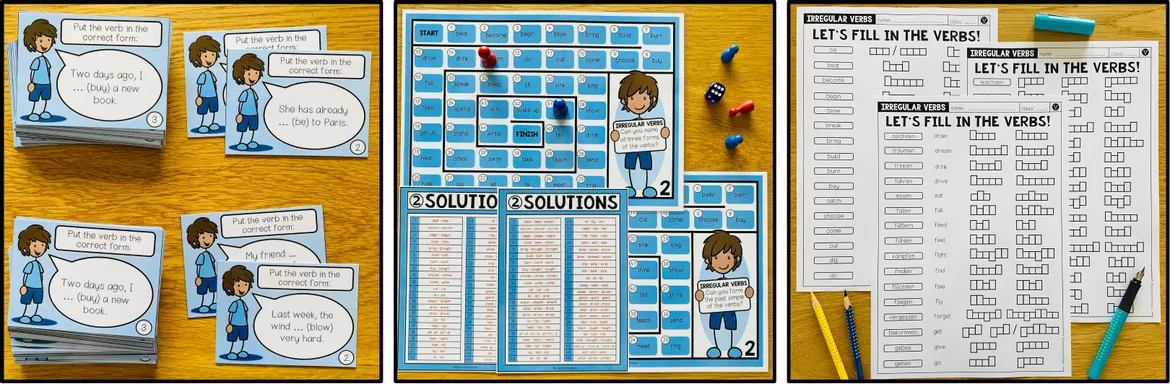
All materials can be used individually or together in a free work, project or open learning programme.
The bingo game is a playful variant to support the learning and practice of ‘irregular verbs’. Weaker pupils or pupils with disabilities benefit greatly from this method. The game is played with the whole class or in small groups.
Curso: 4.-5. PRIM
IRREGULAR VERBS - RulerThe ruler serves as a practical overview for the pupils of the most important ‘irregular verbs’. For this purpose, the rulers are printed out, laminated and then cut to size. The ruler can be kept in a pencil case, for example, and can be used as an aid, especially in the development phases when the verbs are not yet fully learnt.
Curso: 4.-5. PRIM
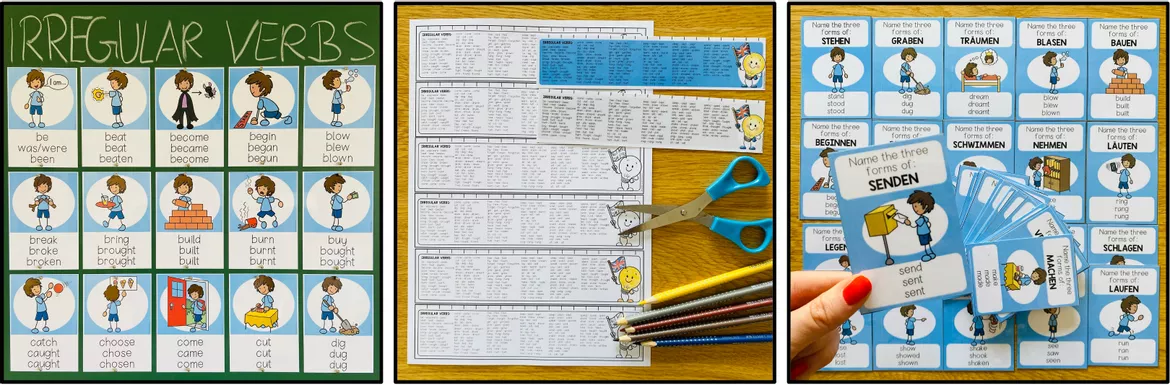
The list serves as a compact overview of the most important ‘Irregular Verbs’. The material also includes a list of ‘Irregular Verbs in Groups’. On this list, the verbs are not sorted alphabetically but categorised into groups with similarities. This enables a neurodidactic (brain- friendly) approach and makes learning and memorizing the verb forms easier.
Curso: 4.-5. PRIM
"I have ... who has ...? - games“ can be used as fun and practical support for learning and practicing new vocabulary. Each student gets one card (if there are more cards than students, some students get 2 cards). The student with the "start" card begins and asks: Who has ....? The student with the correct vocabulary card answers and asks " I have ... who has ...? The game is particularly suitable as an introduction, conclusion or to train new vocabulary in English lessons.
Curso: 4.-5. PRIM




Valoraciones y comentarios