Bitte melde dich an, um einen Kommentar zu hinterlassen.
Bitte beachte auch unsere Datenschutzbestimmungen.
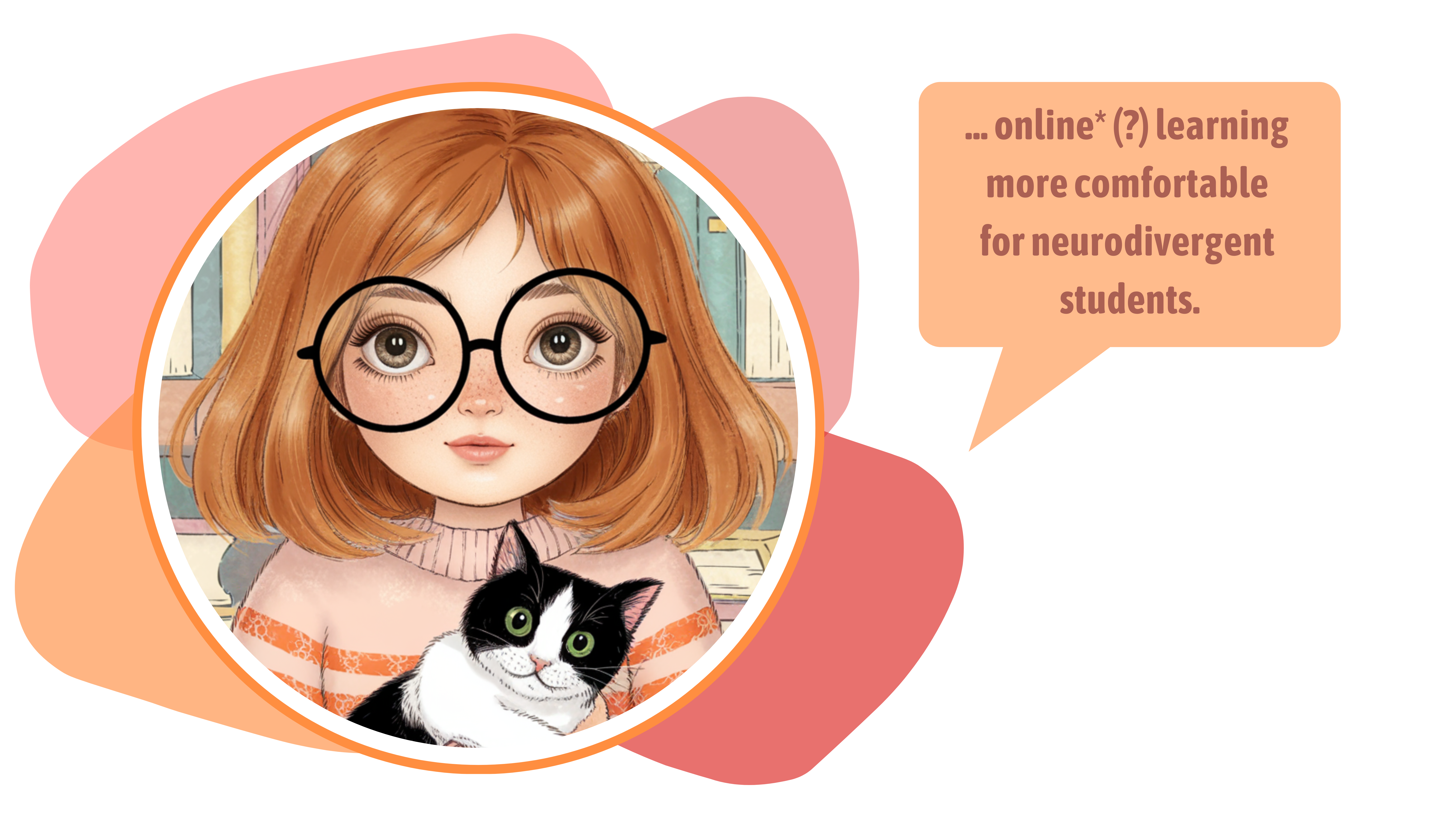
Hello everyone 😊!
As a neurodivergent teacher and student, I wanted to share some ideas on how to make online* (?) learning more comfortable for neurodivergent students. (I'm not an expert, but I've researched this to support myself!)
The techniques I will share help me to stay focused when my mind feels foggy, and I can see that they often benefit all learners - not just neurodivergent ones. Even if you're not sure if you have neurodivergent students in your class, inclusive methods have been proven to make a positive difference for everyone. ✨
It's worth noting that neurodivergence is often underdiagnosed and many teenagers and even adults are only now learning how to meet their needs. That's why I think inclusive teaching by default is so valuable.
Some of these strategies may already be part of your approach - things like reinforcing and repeating information are universally helpful.
What do you think? I'd love to hear your thoughts! 💬
1. Highlighting Key Points
When discussing class goals or introducing content, I underline or highlight key concepts and actions (like verbs) to make the focus clear.
2. Double Explanations
When introducing grammatical or lexical topics—or answering a student’s question—I explain the concept twice:
a. First, with a detailed explanation.
b. Then, with a short summary that repeats the most critical points.
I didn’t realize I did this at first, but it helps me clarify ideas in my own mind—and I believe it gives students a better grasp too! 🧠
3. Taking and Sharing Notes
During class, I take notes on students' language production and later share them so they can see what they’ve said. This helps them visualize their own contributions and reflect on their learning. In these notes, I: Highlight structures that need improvement + Celebrate strong or interesting expressions they use.
To make their sentences even clearer, I use consistent colour coding. For example: 🌈 If we’re learning “have to + infinitive” in Spanish, I underline the subject and verb in one colour + the infinitive in another.
This kind of visual reinforcement helps make patterns and structures easier to understand—for both them and me!
💡 Using bold or italics can also help organize ideas and visually direct attention.
4. Sharing Summary Notes
Although I’m not a big fan of using the chat, I occasionally share pre-prepared summary notes during class. These notes are:
a. Short and visually appealing: They include emojis, bold text, and bullet points for easy readability.
b. Focused on key concepts: For example, verb endings, connectors, or other important topics.
These notes give students extra support, allowing them to revisit and review concepts at their own pace if they feel stuck.
5. Encouraging Questions - this one may be too obvious sorry!
At the start of class, I always remind students that they’re welcome to interrupt me with questions or comments.
🌟 Before moving on to a new exercise, I check in: “Any doubts so far?” or “Anything you’d like me to clarify?”
I make a point to praise their questions—I believe this helps create a safe and open space for them to share.
6. Reading the Room
I try to pay attention to how students are reacting—do they seem comfortable? If something feels forced (e.g., breakout rooms or role-plays), I’ll ask them directly what they’d prefer. 🫂
7. Routine and Repetition
Following a consistent order when calling on students helps reduce anxiety for those who might feel overwhelmed.
🔄 While I sometimes improvise when needed, maintaining a pattern can help everyone feel more at ease. Also, in the autism spectrum, repetition and routine can be incredibly comforting.
8. Shearing extra materials
Sharing class notes, additional resources or recommended websites (within copyright guidelines) after class helps students to revise at their own pace. Access to different media (audio, text, video, etc.) is also very beneficial for neurodivergent students.
*
And that's it! 🎉 Sorry if I went on too long, these are just my own approaches and experiences. I don't do all these things every day, and of course, not every technique works perfectly in every situation. But they help me as a neurodiverse teacher and student.
Neurodiversity comes in many forms, so countless other strategies might work even better in different contexts. I'd love to hear your thoughts and ideas! 😊
Wenn du den Blog-Artikel magst dann klicke auf das Herz. Das hilft uns zu verstehen, welche Artikel besonders lesenswert sind.
 1
1


 1
1