

eduki Qualität
74 Seiten
eduki Qualität
12 Seiten
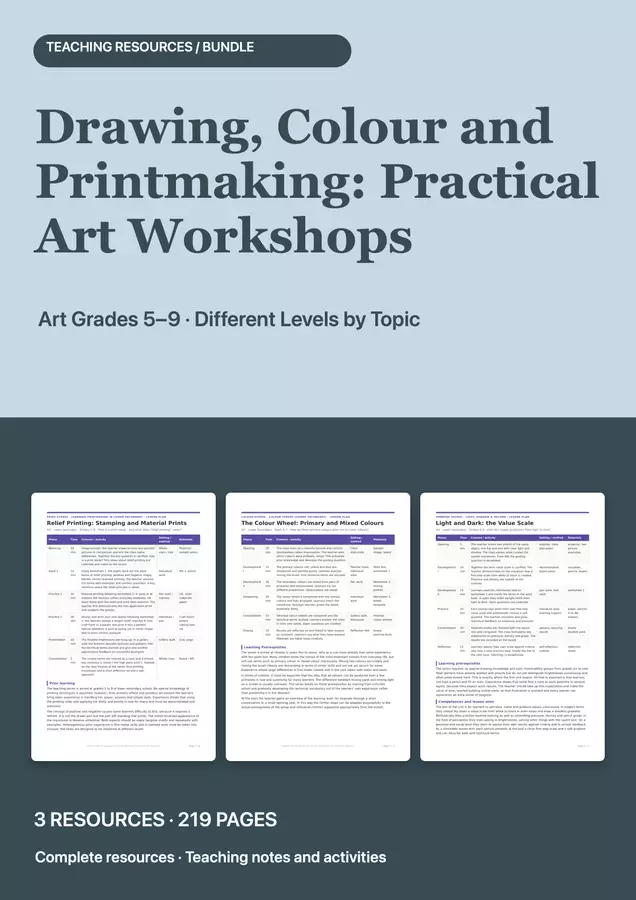


Drawing, Colour and Printmaking: Practical Art Workshops: this bundle contains 3 complete teaching resources with 219 PDF pages in total. Art Grades 5–9 · Different Levels by Topic. All included resources are the English-language editions. They can be taught separately or selected to build a connected sequence around the named topics.
Use the individual packs to introduce concepts, practise subject vocabulary, compare examples and support written or practical outcomes. Select tasks according to learners’ prior knowledge and the level stated in each resource; the bundle is a collection of the listed complete products, rather than a newly sequenced textbook or a promise that every task suits every grade.
Printmaking: Relief Printing, Linocut and Monotype: three English-language Art units for Grades 5–9. Nine worksheets connect explanations, technical vocabulary and practical design tasks. Teacher plans, detailed answers and presentation pages accompany the three topics. This edition is supplied as PDF files.
Introduce a visual example, explain the relevant process and demonstrate a small practical step before pupils develop an idea of their own. Connect the making process with observation: which choice changes the result, and how can the learner explain the effect? The answer guidance supports discussion of both technical knowledge and the quality of a practical response. Teachers can select a topic or use the sequence together.
Colour Theory: Mixing, Contrasts and Expression: three English-language Art units for Grades 5–8. Nine worksheets connect explanations, technical vocabulary and practical design tasks. Teacher plans, detailed answers and presentation pages accompany the three topics. This edition is supplied as PDF files.
Introduce a visual example, explain the relevant process and demonstrate a small practical step before pupils develop an idea of their own. Connect the making process with observation: which choice changes the result, and how can the learner explain the effect? The answer guidance supports discussion of both technical knowledge and the quality of a practical response. Teachers can select a topic or use the sequence together.
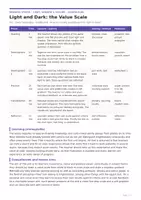
Drawing: Light, Shadow and Form: three connected English-language Art units for Grades 6–9. Nine worksheets connect explanations, subject vocabulary and practical tasks with observation, analysis and reflection. Each unit has its own teacher plan, detailed expected outcomes and classroom presentation, so teachers can select a topic or use the workshop sequence together.
Introduce a visual example or practical question, establish the key terms and let learners test a small idea before developing a more considered response. Ask pupils to explain how a choice affects the result. Short partner discussions and work reviews can connect making with analysis, while the expected outcomes provide concrete criteria for feedback on both written and practical work.
You receive the complete files of the listed individual products, with the worksheets, answers, teaching notes and presentations described in each listing. File formats and additional preparation vary by resource: consult each included product for its exact inventory. PDF page totals count the complete printable editions, including covers, teaching notes and answers; editable versions are not counted again as extra pages.
The printmaking and lower-secondary colour-theory resources are PDF-only. The other listed packs include the editable formats described in their individual offers.
Does this add new worksheets to the individual packs? No. This offer groups the named complete products. If you already own one or more, check the overlap before purchasing. Text, tasks, answers and the supplied cover graphics were fully created with AI. Source references and resource-specific notes are retained in the individual files. The resources have not been classroom tested.
Sum of individual prices: 64.97 €. Bundle price: 49.99 € (saving: 23.1%).
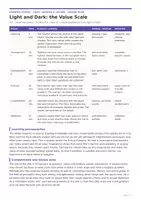
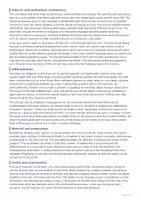
Drawing: Light, Shadow and Form: three connected English-language Art units for Grades 6–9. Nine worksheets connect explanations, subject vocabulary and practical tasks with observation, analysis and reflection. Each unit has its own teacher plan, detailed expected outcomes and classroom presentation, so teachers can select a topic or use the workshop sequence together.What do the three units cover?Light and Dark: the Value ScaleThe Value Scale: from White to Black: You can lay down a value scale in even steps from white to black.Using Pressure and Pencil Grade on Purpose: You can create light and dark values deliberately through pressure and pencil choice.Soft Gradients: the Flowing Transition: You can draw a stepless gradient from light to dark.Hatching & Cross-HatchingParallel Hatching: a surface from lines: You can create a calm grey-tone surface with even parallel lines.Cross-Hatching: darker through layering: You can create darker and denser tones through several crossed layers.Form-following Hatching: lines that follow the form: You can make a curve visible with bent lines that follow the form.Body & Shadow: Sphere, Cylinder, CubeThe Light Zones on the Sphere: You can name and draw the five light zones on a sphere.The Cylinder: a gradient around the curved surface: You can give a cylinder a three-dimensional appearance using a smooth gradient around its curved surface.The Cube: three faces, three brightnesses: You can lay down the visible faces of a cube in clearly different brightnesses.What is included?Nine worksheets with explanatory texts, vocabulary and differentiated tasks.Three teacher lesson plans with prerequisites, competencies, suggested phases, methodology, differentiation and preparation notes.Three detailed answer and expected-outcome documents.Three classroom slide decks.One combined printable PDF and a separate archive containing editable text documents and presentations.Introduce a visual example or practical question, establish the key terms and let learners test a small idea before developing a more considered response. Ask pupils to explain how a choice affects the result. Short partner discussions and work reviews can connect making with analysis, while the expected outcomes provide concrete criteria for feedback on both written and practical work.Preparation for the practical workLight and Dark: the Value Scale: Needed are drawing paper, pencils in various grades from H to at least 4B, clean erasers and, where possible, paper stumps. For the demonstration a visualiser or document camera is suitable; alternatively a large scale on the board will do.Hatching & Cross-Hatching: Needed are drawing paper, pencils of various grades, clean erasers and the three worksheets of the topic. For the differentiation, sheets with a pre-drawn sphere contour are laid ready.Body & Shadow: Sphere, Cylinder, Cube: Needed are drawing paper, pencils of various grades, erasers and the three worksheets of the topic. Central is a lamp with which a sphere, a cylinder and a cube are clearly lit from one side; a ball, a tin and a cube or a small box are suitable as bodies.The school provides practical equipment and materials and selects the visual examples needed for analysis. A separate licensed collection of photographs or artwork reproductions is not included. Read the preparation and organisation notes before the activity, plan workspace and storage where needed, and adjust the amount of support to prior experience. Editable files allow prompts and examples to be adapted to the class.Frequently asked questionsWhich language is included? This is the English edition; German files are not included. Are answers provided? Detailed sample answers and expected outcomes accompany each unit. Can I edit the material? Worksheets, plans, answer guidance and slides are included in editable form in the separate archive. Can units be used individually? Each has a complete set of the teaching files described above.Source and tool notes from the supplied material are retained. Texts, tasks, answers and design were generated with AI, as declared in the listing. PDF versions of the slides are included in the combined page count; identical editable versions are not counted twice.Download size: 72 pages in the combined PDF. Slide pages are included in this count. The editable archive contains 15 text documents and 3 slide decks.
Klassenstufen: 6-7. Klasse
Colour Theory: Mixing, Contrasts and Expression: three English-language Art units for Grades 5–8. Nine worksheets connect explanations, technical vocabulary and practical design tasks. Teacher plans, detailed answers and presentation pages accompany the three topics. This edition is supplied as PDF files.What do the three units cover?The Colour Wheel: Primary and Mixed Colours (Grades 5–7)The Three Primary Colours: Learners name the three primary colours and explain why these cannot be mixed from other colours.Mixing the Secondary Colours: Learners mix the three secondary colours from pairs of primaries and document their mixtures.Tertiary Colours and the Full Wheel: Learners complete the colour wheel with the tertiary colours and arrange all twelve colours correctly.Colour Contrasts: Warm-Cold, Complementary and More (Grades 6–8)Warm-Cold Contrast: Learners distinguish warm and cold colours and use the contrast to show nearness and distance.Complementary Contrast: Learners identify complementary pairs and use them to create bright contrasts.Further Contrasts: Light-Dark, Quality and Quantity: Learners distinguish light-dark, quality and quantity contrast and apply them deliberately.Colour Effect and Mood (Grades 5–8)Colours and Feelings: Learners describe which moods colours can trigger and recognise that effects are not the same for everyone.Designing Mood Pictures: Learners design a picture on a mood using colours and justify their choice of colour.Colours in Everyday Life and Advertising: Learners recognise how colours are used deliberately in everyday life, signs and advertising, and judge their effect.What is included?Nine worksheets with explanatory texts, vocabulary and practical or reflective tasks.Three teacher lesson plans with learning aims, suggested phases, differentiation and preparation.Three detailed answer and expected-outcome documents.Three presentations supplied as PDF pages.One combined printable PDF and a ZIP containing the eighteen separate PDF files, organised by topic.Introduce a visual example, explain the relevant process and demonstrate a small practical step before pupils develop an idea of their own. Connect the making process with observation: which choice changes the result, and how can the learner explain the effect? The answer guidance supports discussion of both technical knowledge and the quality of a practical response. Teachers can select a topic or use the sequence together.Practical preparationThe Colour Wheel: Primary and Mixed Colours: Needed are paint boxes with the primary colours, medium brushes, water containers, cloths and mixing palettes or scrap paper as a mixing surface. For the colour wheel a prepared template with twelve fields is recommended, which makes accurate arrangement easier.Colour Contrasts: Warm-Cold, Complementary and More: Needed are paint boxes, brushes, water and the three worksheets. A large, clearly visible colour wheel supports the identification of complementary pairs.Colour Effect and Mood: Needed are colour cards or colour areas for the opening, paint boxes, brushes and water, and the three worksheets. For the investigation of colour use, some packages, posters or advertising images are suitable, which should be prepared and ready.The school provides practical tools, materials and any visual examples needed for analysis. Read the preparation and organisation notes before beginning and introduce the tools and working routine appropriate to the selected technique. The unit-specific grade ranges are listed above so you can choose the process that fits the class. Plan work areas, storage, drying and clearing up according to the activity.Frequently asked questionsWhich language is included? This is the English edition; German files are not included. Are answers included? Detailed sample answers and expected outcomes accompany the three units. Are editable Word or PowerPoint files included? No. This source edition consists of PDFs, including the presentation pages. Can I print topics separately? Yes. The additional ZIP contains the separate worksheets, plans, answers and presentation PDFs.Source and tool notes from the supplied material are retained. Texts, tasks, answers and design were generated with AI, as declared in the listing. The combined page count includes the presentation pages; the equivalent individual PDF files are not counted twice.Download size: 73 pages in the combined PDF, including the presentation pages, plus a ZIP with the eighteen individual PDFs. No editable text or presentation files are included.
Klassenstufen: 5-6. Klasse
Printmaking: Relief Printing, Linocut and Monotype: three English-language Art units for Grades 5–9. Nine worksheets connect explanations, technical vocabulary and practical design tasks. Teacher plans, detailed answers and presentation pages accompany the three topics. This edition is supplied as PDF files.What do the three units cover?Relief Printing: Stamping and Material Prints (Grades 5–8)What is printmaking? Understanding the basic terms: I can explain relief printing and tell positive and negative shape apart.Material printing: discovering and printing textures: I can print textures with everyday materials and describe them.Designing your own stamp: from motif to impression: I can design a simple stamp and explain mirror-reversed printing.Lino Cut: cut, design, print (Grades 6–9)The lino cut: tools and safety: I can explain the principle of the lino cut and the safety rules.From draft to plate – thinking in mirror image: I can transfer a draft in mirror image and explain why this is necessary.Printing, edition and reduction print: I can pull clean prints, number them and explain the reduction print.Monotype: the one-off print (Grades 5–8)What is a monotype? The one-off: I can explain why a monotype is a one-off and name suitable surfaces.Dark-field and trace monotype: I can carry out two monotype techniques and compare their effects.Experiment: wipe, scratch, combine: I can work with several techniques and reflect on chance and intention.What is included?Nine worksheets with explanatory texts, vocabulary and practical or reflective tasks.Three teacher lesson plans with learning aims, suggested phases, differentiation and preparation.Three detailed answer and expected-outcome documents.Three presentations supplied as PDF pages.One combined printable PDF and a ZIP containing the eighteen separate PDF files, organised by topic.Introduce a visual example, explain the relevant process and demonstrate a small practical step before pupils develop an idea of their own. Connect the making process with observation: which choice changes the result, and how can the learner explain the effect? The answer guidance supports discussion of both technical knowledge and the quality of a practical response. Teachers can select a topic or use the sequence together.Practical preparationRelief Printing: Stamping and Material Prints: You need water-based printing ink, printing rollers, smooth surfaces for rolling out the ink (such as plastic sheets or tiles), enough paper and the materials for the printing forms: collected everyday materials for material printing and craft foam, wood blocks, glue and, where appropriate, potatoes and blunt knives for stamp printing. A line and pegs serve to hang up the impressions.Lino Cut: cut, design, print: Needed are lino plates and offcuts for practice, cutting tools with V-gouge and U-gouge in various widths, bench hooks or boards with a stop, water-based printing ink, rollers, smooth surfaces for rolling out the ink, bone folders or spoons for burnishing and enough paper. For drafts you need drawing paper and pencils, and for hanging the prints a line and pegs.Monotype: the one-off print: Needed are smooth, non-absorbent printing plates such as glass panes with taped edges, acrylic glass or firm films, water-based printing ink or thinned acrylic paint, rollers, paper and tools for designing such as brushes, brush handles, cotton buds, cloths, small sponges and material for stencils. For hanging the prints a line and pegs are used, and for cleaning a bucket of water, soap and cloths.The school provides practical tools, materials and any visual examples needed for analysis. Read the preparation and organisation notes before beginning and introduce the tools and working routine appropriate to the selected technique. The unit-specific grade ranges are listed above so you can choose the process that fits the class. Plan work areas, storage, drying and clearing up according to the activity.Frequently asked questionsWhich language is included? This is the English edition; German files are not included. Are answers included? Detailed sample answers and expected outcomes accompany the three units. Are editable Word or PowerPoint files included? No. This source edition consists of PDFs, including the presentation pages. Can I print topics separately? Yes. The additional ZIP contains the separate worksheets, plans, answers and presentation PDFs.Source and tool notes from the supplied material are retained. Texts, tasks, answers and design were generated with AI, as declared in the listing. The combined page count includes the presentation pages; the equivalent individual PDF files are not counted twice.Download size: 74 pages in the combined PDF, including the presentation pages, plus a ZIP with the eighteen individual PDFs. No editable text or presentation files are included.
Klassenstufen: 5-6. Klasse



Bewertungen und Kommentare