

−20%
118 Seiten
−20%
5 Materialien


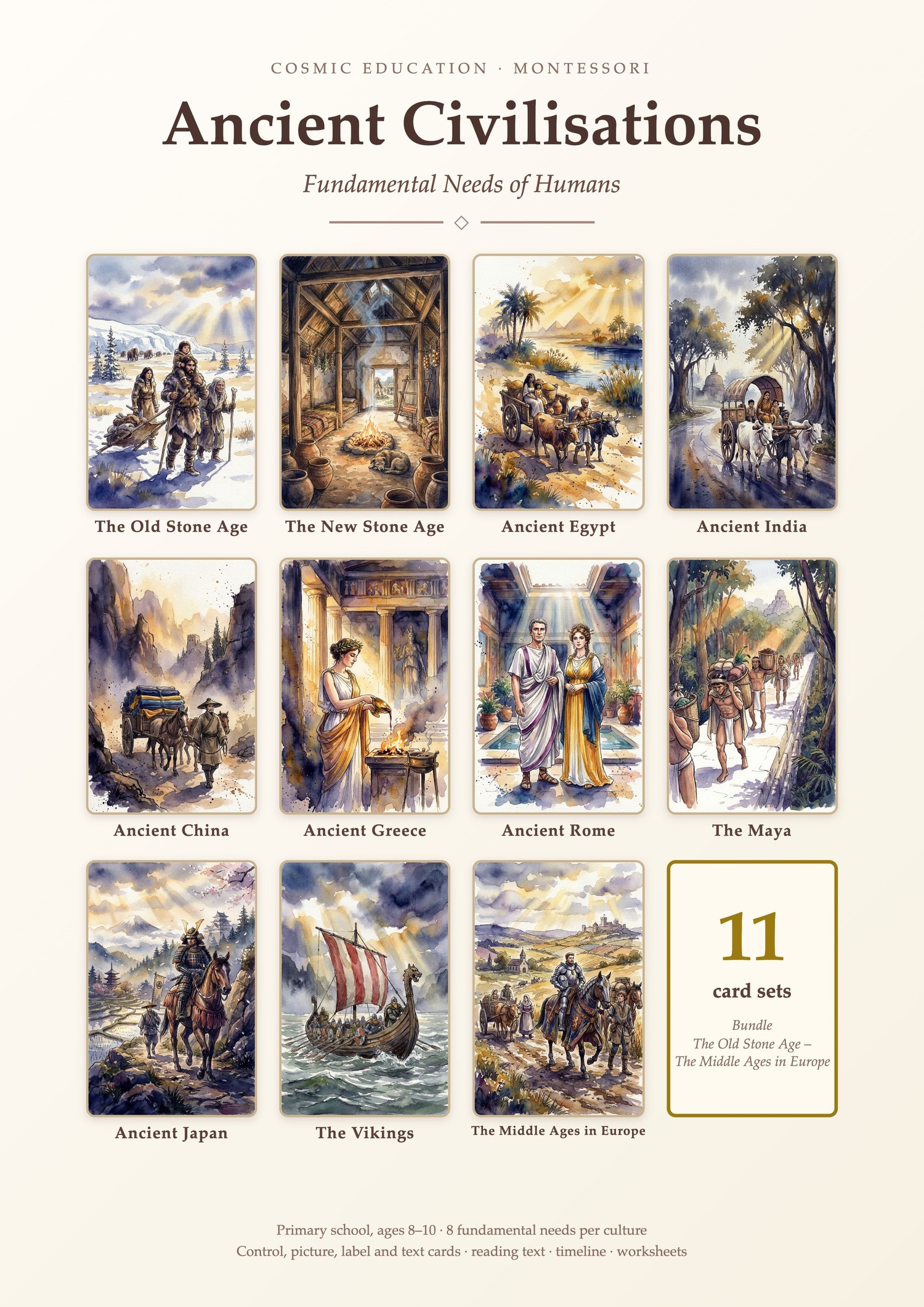
Dieses Materialpaket wurde erst vor Kurzem erstelBundle with all eleven sets on early cultures and ancient civilisations for cosmic education (Montessori) – from the Old Stone Age to the Middle Ages.
Included sets:
• The Old Stone Age
• The New Stone Age
• Ancient Egypt
• Ancient India
• Ancient China
• Ancient Greece
• Ancient Rome
• The Maya
• Ancient Japan
• The Vikings
• The Middle Ages in Europe
Every set shows in eight watercolour cards how people met their fundamental needs, and gives you all the follow-up work: three-part cards with control cards, large pictures, text cards, reading and gap-fill texts, a timeline set and worksheets. For adults: teacher guide with lesson plan and answer key. 29 separate PDFs per set, ready to print.
For primary school, ages 8–10 – independent work, history and reading practice. You save more than 40 % compared with buying the eleven sets separately (11 × 3,99 €).t. Der Autor hat noch keine Beschreibung hinterlegt.
✨ Tatami, kimonos and shrines in nature: eight watercolour cards show how people in ancient Japan met their fundamental needs, from the clay figures of the Jōmon period to the end of the samurai era. This set gives you all the follow-up work – three-part cards, reading texts, a timeline and worksheets, ready to print.For primary school, ages 8–10, following the Montessori approach. Children should be able to read short non-fiction texts. The story text is not included: the story of the Coming of Humans is told beforehand, and the idea of fundamental needs is introduced before or with this material.🌍 What children learn• Name the eight fundamental needs of humans and match them to the pictures• Use examples to explain how people in ancient Japan found food, clothing, shelter and protection• Describe art and religion as spiritual needs• Compare life in ancient Japan with their own everyday life📦 Contents• Three-part cards (nomenclature cards): 8 picture cards with and without colour help, labels and control cards for self-checking, plus an overview sheet• Large pictures for the wall or circle time, text cards with thinking questions, fact file and glossary• Reading text and gap-fill text, with and without word bank• Timeline set: timeline on one scale, timeline strip to lay out, blank cards with pieces to place, illustrated timeline• Worksheets: Everyday Life, Goals, Discover (examine a real bronze bell), Learning Paths, Working Together, plus a children’s guide to working with the cards• For adults: teacher guide with printing plan, lesson plan and answer key, plus a folder cover and a feedback sheet⏱️ Ready to use29 separate PDFs, 45 pages in total. For the main task, three files are enough (control cards, plus picture cards and labels without colour help). Three learning paths – start, main task, going deeper – make differentiation easy; begin with four cards. Ideal for independent work, science and humanities lessons, and reading practice.💡 Good to knowThe eight watercolours are artistic representations – painted hypotheses, not exact records of the past. All facts have been checked against specialist sources. “Ancient Japan” here means the time from the Jōmon period to the end of the samurai era in 1868; most pictures show the Edo period (1603–1868), while the Art card mixes things from almost 3,000 years. Errors in the pictures are named openly: a high dining table, a modern-looking ceiling lamp, a horse that is too large and invented script on the picture scrolls. Beliefs are described, not judged.Digital PDF material to print. Start with the file 12_Teacher_Guide.
Klassenstufen: 3-4. Klasse
✨ One river fed a whole kingdom: eight watercolour cards show how people along the Nile in ancient Egypt met their fundamental needs, from food and clothing to art and religion. This set gives you all the follow-up work – three-part cards, reading texts, a timeline and worksheets, ready to print.For primary school, ages 8–10, following the Montessori approach. Children should be able to read short non-fiction texts. The story text is not included: the story of the Coming of Humans is told beforehand, and the idea of fundamental needs is introduced before or with this material.🌍 What children learn• Name the eight fundamental needs of humans and match them to the pictures• Explain why life in ancient Egypt depended on the Nile• Describe how people along the Nile found food, clothing, shelter and protection• Compare life in ancient Egypt with their own everyday life📦 Contents• Three-part cards (nomenclature cards): 8 picture cards with and without colour help, labels and control cards for self-checking, plus an overview sheet• Large pictures for the wall or circle time, text cards with thinking questions, fact file and glossary• Reading text and gap-fill text, with and without word bank• Timeline set: timeline on one scale, timeline strip to lay out, blank cards with pieces to place, illustrated timeline• Worksheets: Everyday Life, Goals, Discover (examine a boat model from a tomb), Learning Paths, Working Together, plus a children’s guide to working with the cards• For adults: teacher guide with printing plan, lesson plan and answer key, plus a folder cover and a feedback sheet⏱️ Ready to use29 separate PDFs, 45 pages in total. For the main task, three files are enough (control cards, plus picture cards and labels without colour help). Three learning paths – start, main task, going deeper – make differentiation easy; begin with four cards. Ideal for independent work, science and humanities lessons, and reading practice.💡 Good to knowThe eight watercolours are artistic representations – painted hypotheses, not exact records of the past. All facts have been checked against specialist sources. “Ancient Egypt” here covers about 3,000 years, from about 3100 to 30 BCE, and the pictures mix periods. Inaccurate details are named openly, such as the bed with a pillow instead of a headrest or the Greek-style crested helmet; the painted hieroglyphs are invented signs with no readable text. The pyramids were built by organised workers, not armies of slaves. Deities are described, not judged.Digital PDF material to print. Start with the file 12_Teacher_Guide.
Klassenstufen: 3-4. Klasse
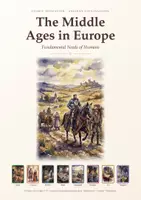
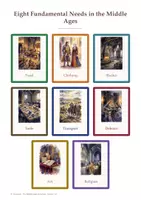
✨ Castles, cathedrals and old towns can still be seen in Europe today: eight watercolour cards show how people in the Middle Ages met their fundamental needs – from peasants and craftspeople to nobles and clergy. This set gives you all the follow-up work – three-part cards, reading texts, a timeline and worksheets, ready to print.For primary school, ages 8–10, following the Montessori approach. Children should be able to read short non-fiction texts. The story text is not included: the story of the Coming of Humans is told beforehand, and the idea of fundamental needs is introduced before or with this material.🌍 What children learn• Name the eight fundamental needs of humans and match them to the pictures• Use examples to explain how people in the Middle Ages found food, clothing, shelter and protection• Distinguish the lives of peasants, craftspeople, nobles and clergy• Compare life in the Middle Ages with their own everyday life📦 Contents• Three-part cards (nomenclature cards): 8 picture cards with and without colour help, labels and control cards for self-checking, plus an overview sheet• Large pictures for the wall or circle time, text cards with thinking questions, fact file and glossary• Reading text and gap-fill text, with and without word bank• Timeline set: timeline on one scale, timeline strip to lay out, blank cards with pieces to place, illustrated timeline• Worksheets: Everyday Life, Goals, Discover (examine a metal lion), Learning Paths, Working Together, plus a children’s guide to working with the cards• For adults: teacher guide with printing plan, lesson plan and answer key, plus a folder cover and a feedback sheet⏱️ Ready to use29 separate PDFs, 47 pages in total. For the main task, three files are enough (control cards, plus picture cards and labels without colour help). Three learning paths – start, main task, going deeper – make differentiation easy; begin with four cards. Ideal for independent work, science and humanities lessons, and reading practice.💡 Good to knowThe eight watercolours are artistic representations – painted hypotheses, not exact records of the past. All facts have been checked against specialist sources. “Middle Ages” here means about 500 to 1500. The pictures mostly show the late Middle Ages and the lives of the nobility and the Church; the coats of arms and flags are decoration, painted writing cannot be read, and the glasses on the feast table look modern. Errors and sweeping statements from the old card set were not carried over. Scholars of the time thought of the Earth as a sphere.Digital PDF material to print. Start with the file 12_Teacher_Guide.
Klassenstufen: 3-4. Klasse
✨ Maize fields, white roads, their own writing and zero: eight watercolour cards show how people in the ancient Maya cities met their fundamental needs, from food and clothing to art and religion. This set gives you all the follow-up work – three-part cards, reading texts, a timeline and worksheets, ready to print.For primary school, ages 8–10, following the Montessori approach. Children should be able to read short non-fiction texts. The story text is not included: the story of the Coming of Humans is told beforehand, and the idea of fundamental needs is introduced before or with this material.🌍 What children learn• Name the eight fundamental needs of humans and match them to the pictures• Use examples to explain how people in the ancient Maya cities found food, clothing, shelter and protection• Describe art and religion as spiritual needs• Know that the Maya still live today, and compare their past life with their own everyday life📦 Contents• Three-part cards (nomenclature cards): 8 picture cards with and without colour help, labels and control cards for self-checking, plus an overview sheet• Large pictures for the wall or circle time, text cards with thinking questions, fact file and glossary• Reading text and gap-fill text, with and without word bank• Timeline set: timeline on one scale, timeline strip to lay out, blank cards with pieces to place, illustrated timeline• Worksheets: Everyday Life, Goals, Discover (examine a real Maya book), Learning Paths, Working Together, plus a children’s guide to working with the cards• For adults: teacher guide with printing plan, lesson plan and answer key, plus a folder cover and a feedback sheet⏱️ Ready to use29 separate PDFs, 45 pages in total. For the main task, three files are enough (control cards, plus picture cards and labels without colour help). Three learning paths – start, main task, going deeper – make differentiation easy; begin with four cards. Ideal for independent work, science and humanities lessons, and reading practice.💡 Good to knowThe eight watercolours are artistic representations – painted hypotheses, not exact records of the past. All facts have been checked against specialist sources. “The Maya” here means the ancient Maya cities from about 1000 BCE to the Spanish conquest (1524 to 1697). The Maya are not a vanished people: millions of Maya live today. The watercolours mix periods and contain errors, for example bananas and invented signs. Besides offerings, there were also blood sacrifices and human sacrifices, so please answer children’s questions about this factually and calmly.Digital PDF material to print. Start with the file 12_Teacher_Guide.
Klassenstufen: 3-4. Klasse


Bewertungen und Kommentare