

−26%
70 Seiten
−26%
60 Seiten


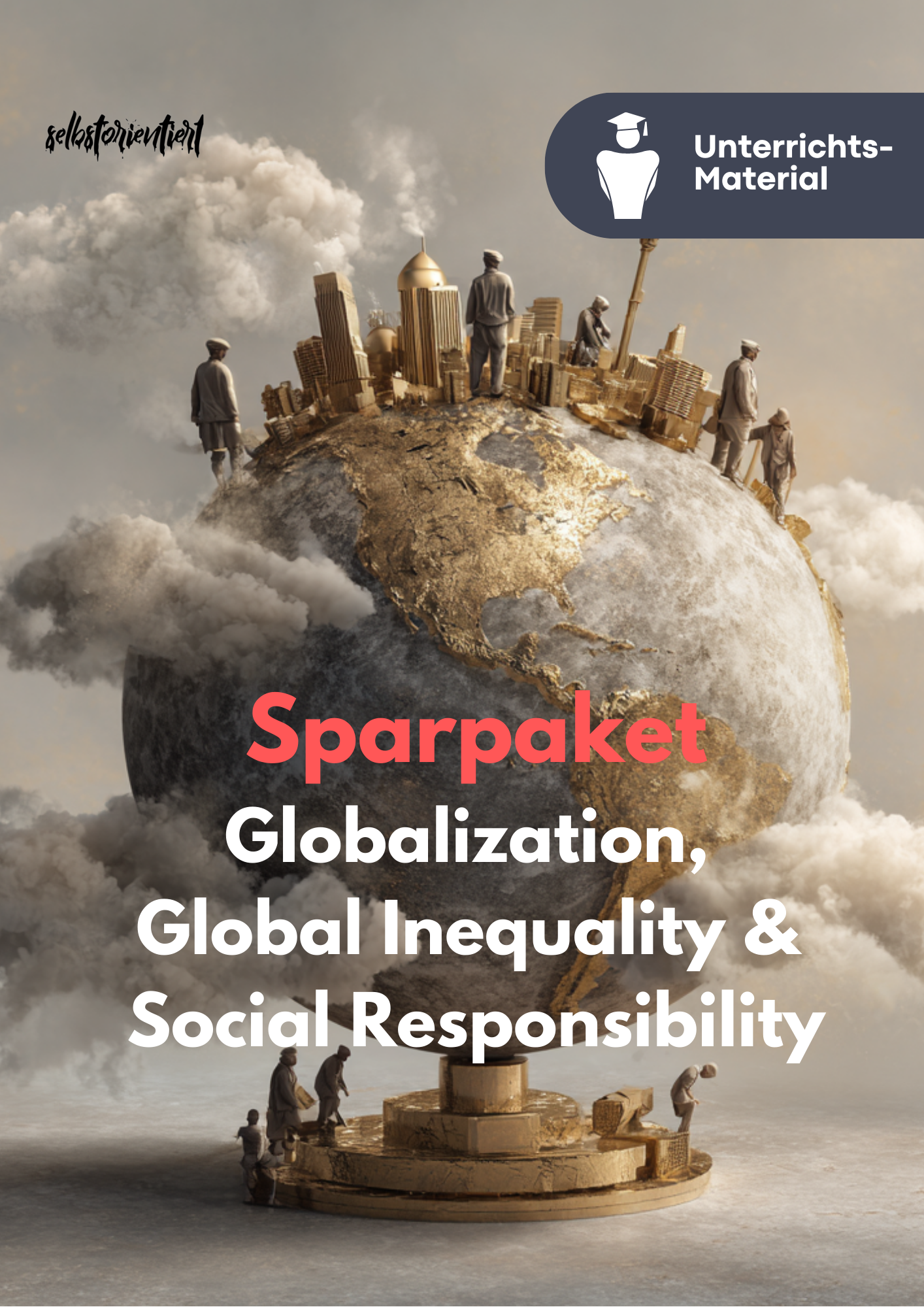
Das Sparpaket Globalization & Development für Klasse 9-12 versammelt fünf hochwertige Unterrichtsmaterialien zu Themen wie globale Ungleichheit, Konsumethik, Trade & Gewinner/Verlierer der Globalisierung sowie individueller Verantwortung im Klimaschutz. Ideal für Geografie, Politik oder Global Studies: Die Materialien kombinieren faktenbasierte Aufgaben, Daten-Analysen und ethisch reflektiertes Denken. So fördern sie nicht nur Wissen, sondern auch Handlungskompetenz und kritische Auseinandersetzung mit globalen Prozessen.
Understanding Globalization – Interdisciplinary High School Resource
Ein umfassendes Werk über Globalisierung als dynamischen Prozess — mit Chancen, Risiken und interdisziplinären Fragestellungen. Eduki
Personal Responsibility in Climate Change – Sustainability Worksheet Pack
Arbeitsblätter, die zur Reflexion über eigenes Verhalten im Kontext Klimawandel und Nachhaltigkeit anregen. Eduki
Global Inequality & Development – High School Resource for Geography & Global Studies
Material zur Analyse globaler Disparitäten: Datenaufgaben, Entwicklungstheorien und mögliche Lösungsansätze. Eduki
Global Trade & Consumer Impact Ethics – Geography Resource
Untersucht die ethischen Auswirkungen globaler Handelsströme und Konsumentscheidungen.
Global Inequality Explained – Winners & Losers of Globalization Grades 9-12
Fokus auf Verteilungseffekte: Wer profitiert vom weltweiten Handel, wer bleibt zurück? Mit Fallbeispielen und Reflexionsfragen.
Es verbindet wirtschaftliche, soziale und ökologische Perspektiven auf Globalisierung
Entwickelt Kompetenzen wie Datenwissen, ethische Urteilsfähigkeit und globales Verantwortungsbewusstsein
Fit für fächerübergreifenden Unterricht: Geo, Politik, Ethik, Global Studies
Enthält Differenzierungsmöglichkeiten durch Mischung aus Daten, Diskussion & Reflexion
This engaging high school resource helps learners understand how their consumption fuels global economic and environmental processes. Using relatable case studies, students investigate: The journey of global products Human rights in supply chains Ethical shopping & political consumption Sustainable alternatives to overconsumption The pros and cons of globalization driven by demand Designed to promote critical awareness and global citizenship, this resource supports a values-based education on real-world issues.
Klassenstufen: Q1 (11./12. Jhg.), Q2 (12./13. Jhg.)
This comprehensive teaching resource dives into the dividing lines of globalization. From sweatshops to tax havens, students uncover how global systems distribute wealth and opportunities unequally. Highlights include: Economic exploitation vs. opportunity creation Inequitable access to technology, education & healthcare Fair trade, social movements & alternatives Visual tools for understanding global North–South relations 🧠 Supports critical thinking, debate & ethical awareness 💡 Ideal for interdisciplinary lessons and project-based learning
Klassenstufen: EF (10./11. Jhg.), Q1 (11./12. Jhg.)
This climate-focused worksheet set is designed for upper secondary students to critically examine how personal actions contribute to or mitigate global climate change. Using real-life case studies and structured tasks, learners reflect on their role in shaping a sustainable future. Inside you'll find: Visual tasks on carbon footprints & lifestyle comparisons Pros/cons of plant-based diets, flight reduction, minimalism Case discussions on greenwashing, activism, and systemic limits Writing prompts on personal vs. political responsibility Evaluation grids, infographics, and ethical scenarios 📘 Equip your students with the tools to analyze, reflect, and act — on a topic that defines their generation.
Klassenstufen: EF (10./11. Jhg.), Q1 (11./12. Jhg.)
This high-quality resource pack helps students understand global disparities through a mix of data-based tasks, development theory, and case study analysis. Included Materials: Visual aids and global development maps Analytical tasks using HDI and other indicators Comparative case studies: Global South vs. Global North Classroom discussions on fair trade, aid effectiveness, and sustainable solutions Writing prompts to foster opinion formation and argumentation 📚 Whether you're exploring poverty, development, or international relations – this resource enables students to think globally and analyze inequality with depth and empathy.This high-quality resource pack helps students understand global disparities through a mix of data-based tasks, development theory, and case study analysis. Included Materials: Visual aids and global development maps Analytical tasks using HDI and other indicators Comparative case studies: Global South vs. Global North Classroom discussions on fair trade, aid effectiveness, and sustainable solutions Writing prompts to foster opinion formation and argumentation 📚 Whether you're exploring poverty, development, or international relations – this resource enables students to think globally and analyze inequality with depth and empathy.
Klassenstufen: EF (10./11. Jhg.), Q1 (11./12. Jhg.)




Bewertungen und Kommentare