


−26%
28 Seiten
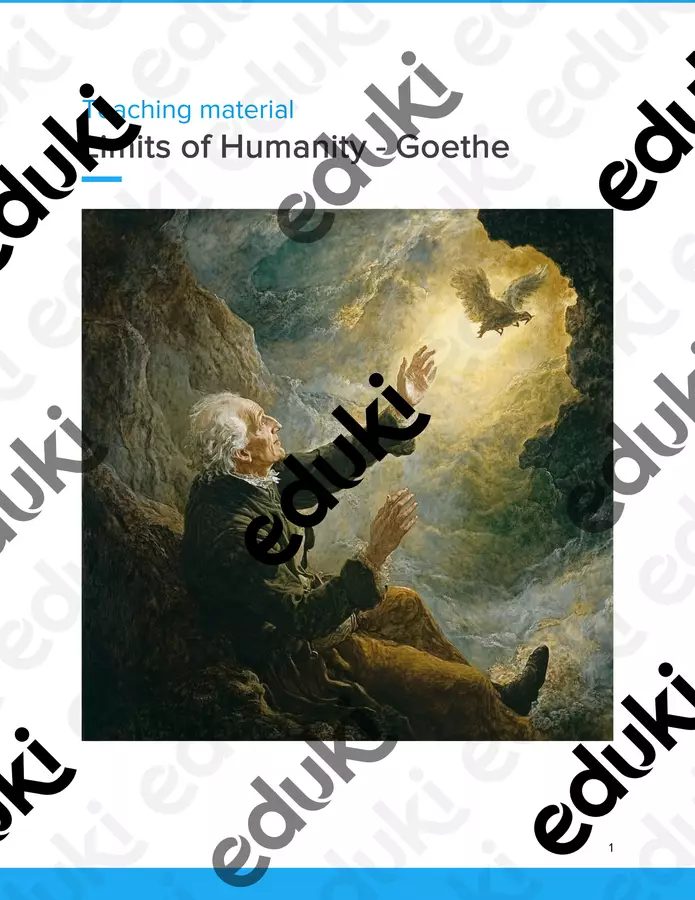



Imagine holding a slim, timeworn book in your hands. The pages are slightly yellowed, the ink softened by time. As you turn a page, your eyes fall on a title: “Grenzen der Menschheit” – “Limits of Humanity”. You begin to read, and suddenly, it feels as if Johann Wolfgang von Goethe himself is speaking to you across the centuries.
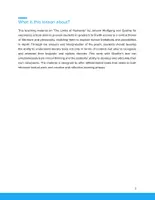
His words do not merely describe; they challenge. They whisper of human greatness, yet remind you of the invisible lines we cannot cross.
Goethe’s “Limits of Humanity” is not a passive reflection. It is a living dialogue between ambition and reality, between the urge to rise and the necessity to remain grounded.
In its verses, the human mind stretches toward the heavens, driven by curiosity and wonder – only to be reminded that the stars are not ours to command.
It is a poem about:
The yearning for knowledge – that insatiable hunger to know more, to understand the mysteries of life.
The inevitability of limits – physical, intellectual, and moral boundaries we cannot erase.
Humility as strength – the wisdom to accept that we are part of something greater than ourselves.
Goethe wrote during an age of exploration – not only geographic but intellectual. The Enlightenment promised that reason could illuminate all mysteries. At the same time, the Sturm und Drang movement embraced raw emotion and individual willpower.
Goethe absorbed both currents, but in “Limits of Humanity”, he offers a gentle warning: Progress without humility is a path to ruin. Ambition is noble, but hubris – the arrogance of overstepping our bounds – leads only to downfall.
Fast forward to our century: AI learns at lightning speed, scientists map the human genome, and rockets leave Earth for Mars. The dream of surpassing every limit is closer than ever.
Yet the questions Goethe asked still echo:
Are there truths we are not meant to know?
Does power demand restraint?
Can humility guide progress?
In an age intoxicated by its own possibilities, Goethe’s words are an anchor, reminding us that wisdom often lies in knowing when to stop.
Goethe’s craftsmanship makes the poem as beautiful as it is profound. He paints contrasts with antitheses, uses metaphors that make the infinite feel intimate, and shapes each line so the rhythm mirrors the rise and fall of human ambition.
Reading it aloud is an experience in itself – the cadence carries you like waves, lifting you toward the sky before grounding you gently back to earth.
You don’t need to be a scholar to connect with this poem. Its themes are universal. Whether you’re:
A student exploring the roots of literature,
A professional reflecting on the ethics of innovation,
Or simply a curious mind searching for perspective,
“Limits of Humanity” offers insights that speak directly to your own life journey.
Educators have long recognized the value of Goethe’s work. This poem can spark rich discussion in:
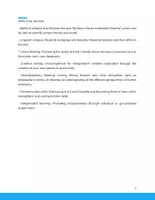
Literature classes – exploring imagery, structure, and symbolism.
Philosophy seminars – debating knowledge, morality, and the human condition.
Science ethics courses – weighing the balance between possibility and responsibility.
Its adaptability makes it a rare gem: equally at home in academic study and personal reflection.
Take a moment to step away from the noise of daily life. Read Goethe’s “Limits of Humanity” slowly, without rushing to “understand” it. Let the imagery sink in. Feel the pull between the desire to transcend and the acceptance of what is.
Ask yourself: Where are my limits? And am I brave enough to accept them?



Bewertungen und Kommentare