

8 Seiten
60 Seiten


Bring the civic and political journey of Australia to life with this ready-to-use, curriculum-aligned bundle, designed for Grades 7 to 10. From the formation of the federation to modern migration debates and national identity, students explore key turning points, influential individuals, and the evolution of rights and responsibilities in Australia.
Origins and motivations behind federation
The 1901 Constitution and democratic structure
Key debates and state perspectives
Worksheets: sequencing, timeline building, historical analysis
Side-by-side comparison of democratic systems
Federalism, separation of powers, voting systems
Activity sheets for Venn diagrams, source-based questions, and debates
What makes an Australian citizen?
Civic responsibilities and legal rights
Discussion tasks on national pride, multiculturalism, and the Constitution
Historical and modern immigration policies (White Australia to today)
Current challenges and achievements in diversity
Tasks include map work, policy evaluation, and bilingual discussion prompts
The changing face of Australian society
Political reactions to immigration
Interdisciplinary tasks connecting sociology, civics, and history
Biographical studies of political and social changemakers
Individuals such as Eddie Mabo, Julia Gillard, and Sir Henry Parkes
Critical thinking tasks: legacy mapping, source evaluation, civic values
Spotlight on influential federation leaders
How individual visions shaped political structures
Source analysis: speeches, photos, constitutional texts
✔ Designed for Grades 7–10
✔ Curriculum-aligned for Civics, History & Social Studies
✔ Includes editable PDFs, worksheets, and discussion prompts
✔ Supports independent and group learning
✔ Engaging visuals, timelines, and source material
✔ Ideal for both in-class and remote teaching
Builds deep civic understanding with relatable topics
Encourages comparative thinking and critical reflection
Supports skills-based learning: source analysis, structured writing, argumentation
Addresses identity, democracy, rights, and diversity
Introduce your students to the founding figures of modern Australia with this in-depth History workbook. Designed for Grades 7–10, this resource explores the lives and contributions of the key personalities who led Australia into federation in 1901. Your students will: meet Sir Henry Parkes and analyze his call for unification explore the role of Edmund Barton as first Prime Minister study Alfred Deakin’s contributions to Australia’s early government discover Catherine Helen Spence’s groundbreaking advocacy reflect on how Indigenous Australians were impacted and represented What’s included: a rich and accessible reading passage glossary with essential terms comprehension and discussion quiz (with answers) role-based creative assignments and primary source activities timeline project for key events and people PLUS: 6 printable worksheets to support deeper thinking and differentiated instruction Use this resource in World History, Government, or Australian Studies to help students connect the past to modern ideas of citizenship and democracy.
Klassenstufen: 7-8. Klasse
Help your students explore the meaning and significance of Australian citizenship. This resource offers a clear and engaging introduction to the legal foundations, rights and responsibilities, and current debates around citizenship in Australia. Topics covered: How citizenship is acquired (birth, naturalization, dual citizenship) Legal rights and civic duties of Australian citizens The structure and purpose of the Australian Citizenship Test The role of citizenship in identity, belonging, and integration Historical context: Indigenous Australians, immigration, and inclusion Included: An age-appropriate reading passage, glossary of key terms, quiz with answer key, real-life scenarios for discussion, a group task to design a citizenship guide PLUS: 6 extra worksheets with mixed tasks such as matching, analysis, and graphic interpretation Perfect for Social Studies, Civics, or Global Education classes.
Klassenstufen: 8-9. Klasse
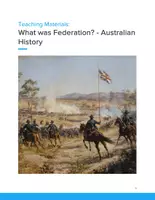
Help your students understand a major turning point in Australian history – the Federation of 1901. This Social Studies resource explains how six separate British colonies united to form the Commonwealth of Australia under a shared constitution, and how this shaped the country's government and national identity. Your students will: learn why the colonies chose to unite understand the key steps of the constitutional process analyze how power was divided between state and federal governments reflect on how Indigenous Australians were affected explore how federation still shapes modern Australia What’s included: an informative, student-friendly reading glossary of key political and historical terms quiz and answer key group activity: simulate a colonial convention creative task: design a visual constitution poster PLUS: 6 additional worksheets covering timeline building, constitutional principles, and debate exercises Great for Social Studies, World History, Civics, or Global Politics classes – and an excellent way to connect government, identity, and citizenship across cultures.
Klassenstufen: 8-9. Klasse
Explore the topic of migration to Australia through this Social Studies workbook designed for Grades 7–10. From the gold rush to modern humanitarian programs, this resource offers a comprehensive look at why people move to Australia and how the country has shaped its immigration policies over time. Your students will: understand key immigration waves in Australian history analyze current migration systems and debates explore real-life causes of migration (economic, political, environmental) reflect on how multiculturalism shapes Australian identity evaluate controversial issues like border control and refugee policies What’s included: a student-friendly reading passage glossary of key terms comprehension quiz with answer key case-based discussion prompts group task: draft a political statement on migration poster project: multicultural Australia PLUS: 6 additional worksheets featuring scaffolded assignments, writing tasks, and visual analysis An excellent addition to Social Studies, Geography, or Global Politics lessons focused on migration, diversity, and modern society.
Klassenstufen: 8-9. Klasse




Bewertungen und Kommentare