

eduki Qualität
60 Seiten
eduki Qualität
70 Seiten
12 Seiten




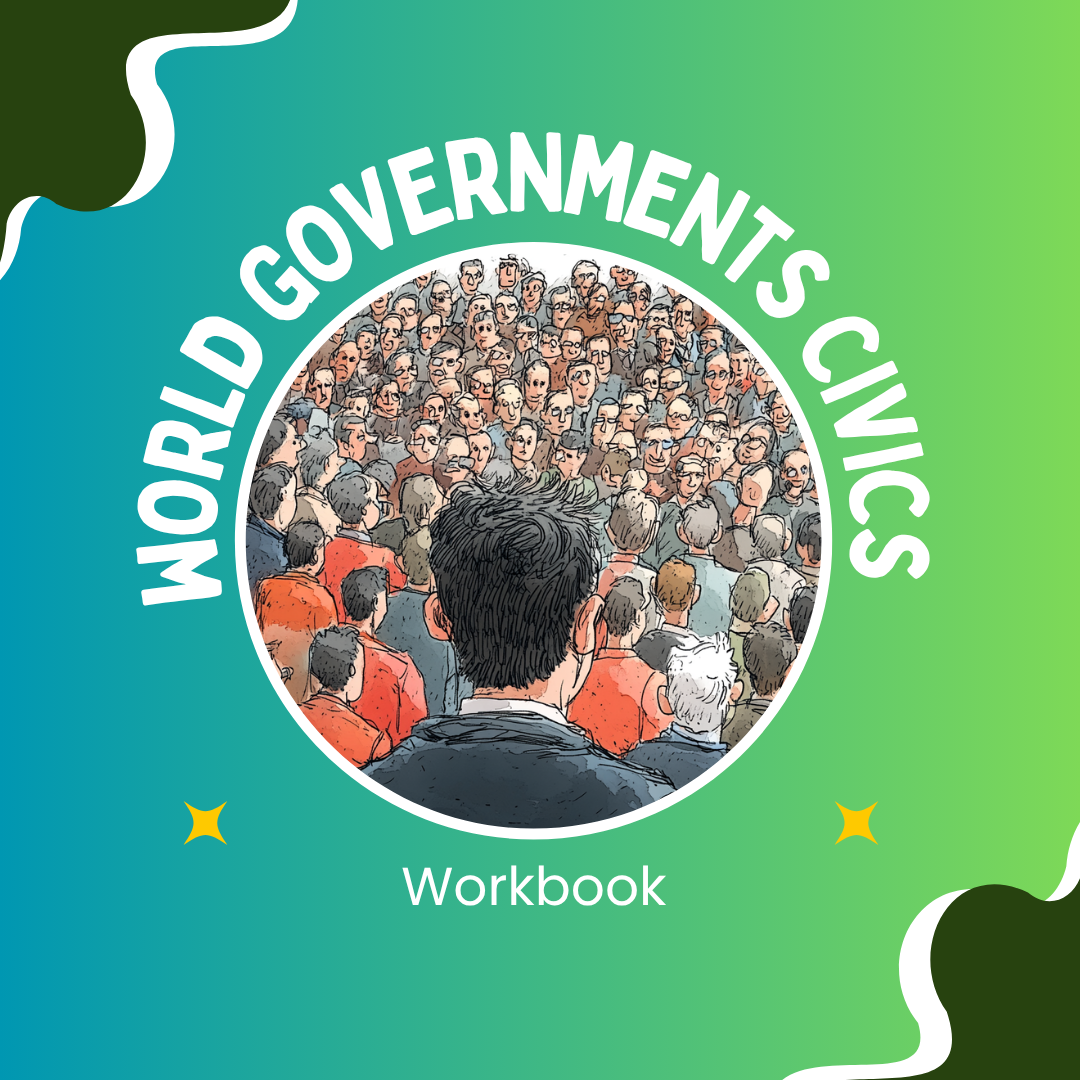
"How does government work – and how do democracies differ around the world?"
This comprehensive bundle answers that question through 7 ready-to-use, curriculum-aligned civics workbooks designed for Grades 5–9. The materials focus on democratic systems in Europe and North America – helping students develop critical thinking, political literacy, and a global perspective on government structures and civic participation.
Each workbook includes clearly structured texts, vocabulary tasks, diagrams, and engaging activities that explain how different democratic systems are organized and how they function in everyday life.
🔗 How Does the UK Government Work?
Learn about Britain’s constitutional monarchy, parliamentary system, and the roles of the Prime Minister, Parliament, and the monarch.
🔗 How Does Politics Work in Italy?
Explore Italy’s parliamentary republic, bicameral system, and the President’s symbolic role in forming coalition governments.
🔗 How Does Politics Work in France?
Understand the dual executive of France’s semi-presidential system, including the powers of the President and Prime Minister.
🔗 How Does Politics Work in Austria?
Introduces Austria’s federal democratic structure, the role of the Chancellor, and the importance of the Austrian Parliament.
🔗 How Does U.S. Politics Work?
A clear introduction to the U.S. Constitution, the separation of powers, and how the three branches of government operate.
🔗 How Does Politics Work in Switzerland?
Discover Switzerland’s unique model of direct democracy, referenda, federalism, and consensus decision-making.
🔗 Germany’s Political Parties – Democracy in Practice
Learn about Germany’s multiparty system, proportional representation, and how parties shape democratic processes.
This bundle provides complete civic education units that compare and explain major democratic systems in a clear, student-friendly way. All resources are:
📥 No-prep and ready to print or use digitally
📚 Aligned with international civics and social studies curricula
🧠 Designed to promote understanding, comparison, and reflection
Each workbook follows a consistent format to help students build confidence as they encounter new governmental concepts. With graphic organizers, concept maps, comprehension tasks, and reflection questions, your learners will not only understand how governments work but also why democratic structures vary across countries.
This makes the bundle ideal for:
Global citizenship units
Civics, government, and political education classes
Constitution Day or Democracy Week
Comparative politics projects
Bilingual or international classrooms
Understand the key principles of democracy in practice
Compare different democratic systems (presidential, parliamentary, semi-presidential)
Recognize the structure and function of major political institutions
Reflect on the role of voting, parties, and citizens in democratic systems
Learn country-specific terminology and constitutional features
Identify similarities and differences between democratic traditions across the globe
🔄 Saves hours of planning – all workbooks include tasks, texts, diagrams, and solutions
🧩 Modular structure – use workbooks individually or as a global democracy unit
🎒 Perfect for classroom, homeschooling, projects, or substitute teaching
🏫 Works in regular and bilingual programs (English only)
🎓 Supports civic literacy, critical thinking, and global awareness
Whether you’re teaching a single country’s political system or comparing multiple systems in depth – this bundle offers you everything you need in one download.
Clear explanatory texts
Key terms and definitions
Diagrams (e.g. structure of government)
Vocabulary tasks
Comprehension and analysis questions
Graphic organizers for comparison
Optional extension tasks and reflection questions
Answer keys included
Weekly civics lessons
Cross-country comparison charts
Democracy-focused projects
Political education in European and international schools
Content & Language Integrated Learning (CLIL)
Social studies assessments
The Global Government & Democracy Bundle is the perfect resource for teaching democratic systems in a comparative, structured, and accessible way. Your students will walk away with a deeper understanding of how democracies function—and how diverse these systems can be across countries.
With more than 150 pages of ready-made content, this bundle empowers you to deliver high-quality civics instruction—without spending hours on preparation.
This engaging resource introduces students in Grades 5–9 to the French political system. They’ll explore how the Fifth Republic is structured, how powers are shared between President and Parliament, and how citizens participate in democracy. Topics include: the French Constitution and founding principles the semi-presidential system: roles of President and Prime Minister how the National Assembly and Senate work how laws are made and who holds power elections, political parties, and citizen participation comparing France with Germany or the United States Included: a clear reading section, glossary of terms, quiz with key, group puzzle, real-world examples, and a creative project (e.g. design a presidential campaign poster) NEW: 6 differentiated worksheets for analysis, reflection, and comparison Perfect for Social Studies, Civics, History, or bilingual lessons – a practical tool for teaching European political systems.
Klassenstufen: 8-9. Klasse
Bring the British political system into your classroom with this printable unit for Grades 5–9. Students will discover how the UK’s constitutional monarchy and parliamentary democracy work side by side – including the roles of the Monarch, Prime Minister, and Parliament. Your students will: explore the structure of British government understand the difference between the House of Commons and the House of Lords learn how laws are made in Westminster reflect on the symbolic role of the Monarch vs. the political role of the Prime Minister compare the UK system to the U.S. or Germany engage with elections, political parties, and democratic participation What’s included: age-appropriate reading text glossary of UK political terms quiz with answer key group puzzle activity creative task: build your own political party or election campaign PLUS: 6 printable worksheets with analysis, comparison, and reflection activities Perfect for Civics, Global Studies, History, or Government – a great resource for understanding real-world democracies and political systems.
Klassenstufen: 8-9. Klasse
This workbook introduces students in Grades 5–9 to the structure and function of the U.S. political system. Through age-appropriate texts and interactive tasks, learners gain insight into how laws are made, how powers are separated, and how democracy works in a federal presidential system. Topics include: the U.S. Constitution and its principles the three branches of government: Legislative, Executive, Judicial Congress: Senate and House of Representatives the role of the President and federal agencies checks and balances, elections, and political parties Included: reading passage, glossary of political terms, quiz with answer key, group puzzle activity, real-life examples, and a creative task (e.g. design a campaign strategy) NEW: 6 differentiated worksheets to support various learning levels and critical thinking Perfect for Social Studies, Civics, History, or Comparative Government.
Klassenstufen: 8-9. Klasse
This engaging workbook introduces students in Grades 5–9 to Austria’s political system, offering a clear overview of how democracy works in this European republic. Students explore Austria’s federal structure, parliament, and constitutional roles. Topics include: Austria’s Federal Constitution and legal foundations the roles of National Council (Nationalrat), Federal Council (Bundesrat), and Federal President how laws are made in a parliamentary democracy the structure of Austria’s federal states (Länder) citizen participation and democratic principles comparison to other democratic systems (e.g. Germany, Switzerland) Included: an informative reading, glossary of political terms, quiz with answer key, group puzzle activity, real-life case scenarios, and a creative classroom task NEW: 6 differentiated worksheets to deepen understanding and promote critical thinking Perfect for Social Studies, Civics, or Comparative Politics – a clear and accessible guide to how Austrian democracy functions.
Klassenstufen: 8-9. Klasse



Bewertungen und Kommentare