

−26%
20 Seiten
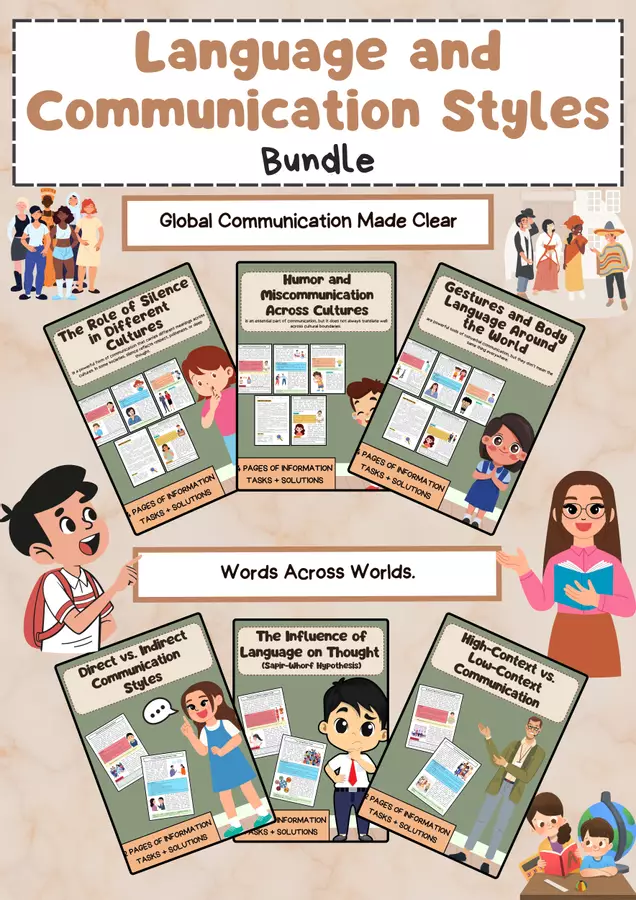


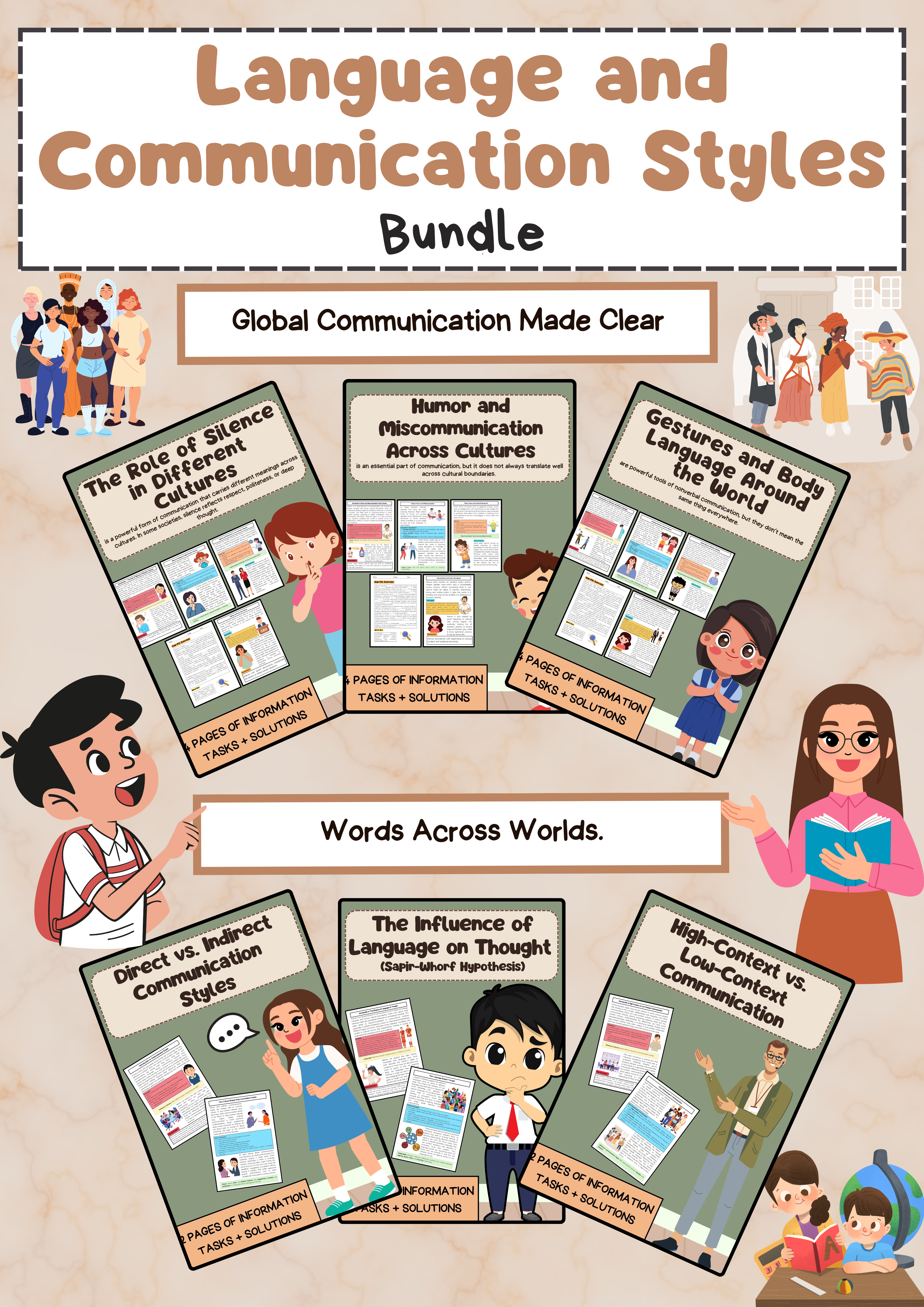
Explore the fascinating world of language, communication styles, and cultural expression with this comprehensive EFL/ESL teaching bundle. Perfect for intercultural communication, English language learning, and global competence education, this ready-to-use resource set covers key differences in how people around the world communicate verbally and non-verbally.
Ideal for upper-intermediate to advanced learners, this resource is rich in real-world examples, discussion prompts, and engaging activities. It’s perfect for lessons on pragmatics, sociolinguistics, body language, nonverbal cues, and cultural misunderstandings—topics that are becoming increasingly important in globalized classrooms.
This material bundle is suitable for high school, adult education, and international communication courses. Whether you're teaching in-person or online, this pack equips students with essential skills for interpreting cultural signals, identifying miscommunication, and developing global awareness.✅ Included Teaching Materials:
Direct vs. Indirect Communication Styles
A dynamic lesson exploring how some cultures communicate explicitly while others rely on subtlety, tone, or context. Includes examples, comparisons, and practice tasks.
The Role of Silence in Different Cultures
Silence speaks volumes—this lesson teaches students how silence can be interpreted differently across cultures, including Japan, the US, and Finland.
High-Context vs. Low-Context Communication
Help students understand how some cultures rely on shared understanding and implicit cues (high-context), while others prioritize clarity and directness (low-context).
Gestures and Body Language Around the World
A visual and interactive lesson showing how the same gesture can mean very different things globally—perfect for sparking curiosity and critical thinking.
The Influence of Language on Thought (Sapir-Whorf Hypothesis)
Introduce students to this fascinating theory that suggests language shapes the way we see the world—with engaging examples and vocabulary.
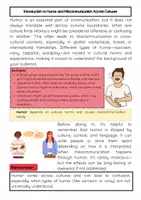
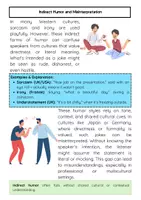
Humor and Miscommunication Across Cultures
What’s funny in one culture can be offensive in another. This lesson helps learners explore cross-cultural humor, sarcasm, and how jokes can lead to miscommunication.
Easy to implement and highly engaging
Focus on real-life communication skills
Encourages deep discussion and critical thinking
Promotes cultural sensitivity and global understanding
Fully editable, printable, and compatible with both digital and physical classrooms
Diese Englisch-Unterrichtseinheit behandelt das Thema „Silence in Cultures“ – also die Rolle von Stille in der interkulturellen Kommunikation. Lernende erfahren, wie Stille in verschiedenen Kulturen als Zeichen von Respekt, Strategie oder auch Unbehagen interpretiert wird. Mit vier erklärenden Informationsseiten, einer umfangreichen Zusammenfassung und vielfältigen Aufgaben (inkl. Lösungen). Ideal für den Englisch- oder Sozialkundeunterricht ab Klasse 9, besonders geeignet für interkulturelle Kompetenz, Kommunikation und Englisch als Fremdsprache (EFL/ESL).
Klassenstufen: 6-7. Klasse
Englisches Unterrichtsmaterial zum Thema Körpersprache, nonverbale Kommunikation und Gesten in verschiedenen Kulturen. Behandelt Unterschiede bei Begrüßungen, Mimik, Augenkontakt und Handzeichen. Enthält 4 Infoseiten, eine große Zusammenfassung sowie umfangreiche Übungen mit Lösungen (Lückentext, Zuordnungen, Verständnisfragen u.v.m.). Geeignet für den Englischunterricht ab Klasse 9, besonders in den Bereichen Interkulturelle Kommunikation, Soft Skills und Culture Studies.
Klassenstufen: 8-9. Klasse
Komplettes Unterrichtsmaterial zu direkten vs. indirekten Kommunikationsstilen. Enthält Erklärtexte, Regeln, Aufgaben mit Lösungen, kulturelle Beispiele. Für den Englischunterricht ab Klasse 9 geeignet. Fördert interkulturelle Kompetenz und Sprachbewusstsein.Description (English): Complete teaching unit on direct and indirect communication styles. Includes 4 informational sections, examples from cultural contexts, rule explanations, comprehension tasks, sentence completion, and vocabulary. Tasks with full solutions included. Ideal for cultural awareness, language style lessons, and soft skills training. Suitable for ESL/EFL learners from Grade 9 and up.
Klassenstufen: 8-9. Klasse
German Description: Umfassendes Unterrichtsmaterial zur Sapir-Whorf-Hypothese: Sprache beeinflusst Denken. Enthält kulturvergleichende Beispiele, Satzergänzungen, Lückentexte, Fachbegriffserklärungen und Lösungen. Geeignet für Englischunterricht in Klasse 10–12. Thema: Sprache und Denken, Linguistic Relativity, Kulturvergleich, Sprachstruktur.
Klassenstufen: 7-8. Klasse




Bewertungen und Kommentare